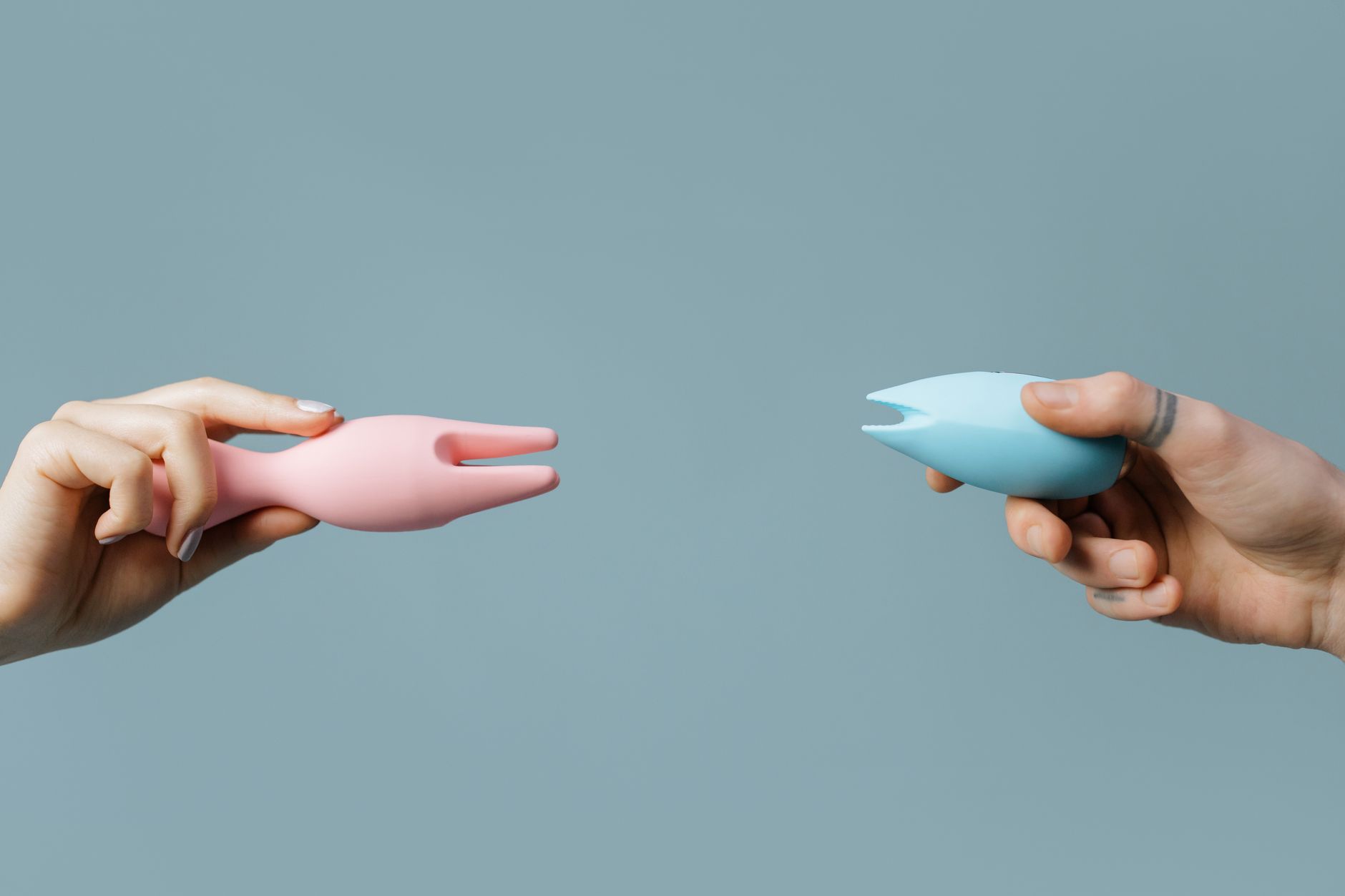
Let's be real about what doesn't work
Here's the thing: not everyone wants penetration. And the weird cultural narrative that says "good sex" automatically means P-in-V is honestly just leaving a lot of people bored, unsatisfied, or faking it. If you or your partner prefer external clitoral stimulation, that's not a preference you need to work around. It's the main event.
The clitoris has 8,000 nerve endings. The vaginal canal has roughly 1,500. Math checks out. External stimulation is, for many people, the most reliable path to orgasm. A good lemon vibrator, used intentionally, is a complete sexual experience on its own. Not a warm-up. The whole thing.
The trick is learning how to build a routine that feels connected, present, and genuinely satisfying whether you're exploring solo or with a partner.
Why external stimulation often gets sidelined
There's a weird hierarchy in how we talk about sex. Penetration feels like the "real thing," and everything else gets labeled as foreplay or "alternative." That's not how bodies work. It's not even how pleasure works.
Many people with vulvas orgasm most reliably through external clitoral stimulation. Some never orgasm through penetration alone, and that's completely normal. Others prefer external stimulation because it feels better, lasts longer, or requires less effort to peak. If that's you or your partner, the goal isn't to "graduate" to something else. The goal is to lean into what actually works.
A lemon vibrator is perfect for this because air-suction technology targets the clitoral complex without requiring you to find a specific angle or maintain constant pressure. You set it and it does the work. That matters when you're partnered, especially, because it frees you to be present instead of focused on mechanics.
Building a solo routine around clitoral pleasure
If you're exploring solo, the setup is straightforward.
Start with no expectations. Lie down or sit somewhere comfortable, ideally somewhere you can relax without monitoring time or worrying about being walked in on. Give yourself 20 minutes, not 5. Arousal takes time, and your brain needs permission to settle into the experience.
Begin on the lowest setting. Spend 3-5 minutes on your outer labia, the mons pubis, or the clitoral hood. Your clitoris is sensitive, and jumping straight to high-intensity stimulation can feel numbing or sharp. Let arousal build first. You'll notice the area becoming more responsive, less ticklish, more urgent.
Then move to the clitoral glans itself. This is where intensity matters. You might stay on pattern 2 or 3, or you might want to climb to 5 or 6. The point: you're in charge. If one setting feels boring, jump. If one feels too intense, back off. This isn't a performance. It's data gathering about your own body.
Many people find that a rhythm matters more than constant intensity. Try three pulses on, one pulse off. Or hold it steady for thirty seconds, then shift the angle slightly. A lemon vibrator's responsiveness means you can actually play with this, adjusting in real time.
Orgasm from external clitoral stimulation often feels different than orgasm from penetration. Less of a build and release, more of a peak that holds or multiplies. Don't expect Hollywood. You'll know it when it happens. And it might take five sessions to figure out what your body actually wants. That's fine.
Shifting the dynamic when your partner prefers external stimulation
If your partner is the one who prefers external clitoral stimulation, here's what changes: you're no longer the main performer. The vibrator is. Your job is presence and connection.
Talk about it first. "What do you actually want when we're together?" is different than "Do you want me to go down on you?" The first opens a conversation. The second closes it. If your partner says external stimulation is the main event, ask what that looks like. Are they touching themselves while you kiss them? Are they using the lemon vibrator while you're inside them? Are they using it while you're not inside, and that's the whole thing? There's no wrong answer. But you need to know.
The gift of a lemon vibrator in partnered sex is that it removes pressure from you. If your partner needs clitoral stimulation to orgasm, and you can't provide that with your fingers or mouth (maybe your jaw gets tired, maybe the angle doesn't work, maybe they need stronger sensation), the vibrator closes that gap. It's not a replacement. It's an upgrade to what you're already doing together.
Here's what works for many couples: your partner uses the lemon vibrator while you're inside them, or while you're kissing them, or while you're together in whatever configuration feels good. You're not performing the stimulation. You're creating the context. The presence, the touch, the intimacy happens around the vibrator, not despite it.
One practical note: if you're wearing a penis or using a strap-on, your partner can use the vibrator during penetration without interference. The clitoris sits outside the vagina, so there's plenty of room. The sensation for your partner is penetration plus external clitoral stimulation simultaneously. For many people, this is the combination that actually works.
Setting the emotional tone
Here's where a lot of couples get stuck. If external clitoral stimulation has been labeled as "alternative" or "backup," there's often shame floating around. Your partner might feel like they're asking for something weird. You might feel like you're being replaced.
Neither of those is true. You're not being replaced. You're being invited into what actually feels good for your partner. That's the opposite of replacement. That's specificity. That's respect.
When you're together and your partner is using a lemon vibrator, your job is to be there without performance anxiety. Touch them. Kiss them. Tell them what you notice. Make eye contact. Do what you'd normally do, except the primary stimulation is coming from the device instead of your hands or mouth. It's a small shift in logistics. The connection is the same.
Maybe it helps to think of it this way: you're not trying to make them come. They are. The vibrator is helping. You're just present for it. That's plenty.
When to introduce a vibrator into partnered sex
Timing matters. If this is new territory for both of you, introduce it when there's no pressure to perform. Not the first time you're trying partnered sex. Not a night when you're already anxious or stressed. Pick a time when you're both relaxed, curious, and have space to laugh if something feels awkward.
One approach: start solo. Your partner uses the lemon vibrator alone a few times, figures out what they like, gets comfortable with the sensations. Then, when they're ready, they bring it into partnered sex. You've seen them use it solo, you know the patterns they like, and you're not meeting the device for the first time while also trying to be intimate.
Another approach: explore it together. "I want to try this with you" is different than "I need you to be okay with this." The first invites collaboration. The second creates obligation.
If you're returning to pleasure after years away, introducing external clitoral stimulation early means you're not rebuilding around assumptions about what should feel good. You're building around what actually does.
Practical troubleshooting
Some couples run into small logistical issues. Your partner comes quickly with the vibrator and you're used to longer sessions. You want to stay inside longer but they're done. This is actually a good problem. It means the vibrator is working. The answer: keep going afterward, or use it as foreplay for a longer session, or accept that sometimes partnered sex is shorter and that's fine.
Other couples worry about desensitization. Will the lemon vibrator make them numb to other types of touch? Generally, no. The clitoris doesn't "wear out." What sometimes happens is that sensation from hands or mouth feels different after using a vibrator. Weaker, less focused. That's not damage. That's just contrast. If your partner wants to recalibrate between vibrator sessions and partner touch, taking a few days off the device helps. But it's not mandatory. Some people use the vibrator multiple times a week without issues.
One more thing: rhythm. Your partner might need you to hold still while they use the vibrator, or they might want you to move. Ask. "Do you want me to stay still or keep going?" The vibrator is doing one job. You're doing another. They can coexist or they can alternate. Your partner will let you know.
The bigger picture
Using a lemon vibrator with a partner who prefers external clitoral stimulation isn't a workaround. It's an honest way to build pleasure that actually works. You're not trying to make them come in a way that feels obligatory. You're collaborating on what feels good. That shift alone changes the whole dynamic.
Your pleasure matters. So does theirs. When you align around external stimulation as the primary experience instead of something supplementary, everyone relaxes. The pressure drops. The connection deepens. And orgasm, when it comes, isn't borrowed from someone else's idea of what sex should look like. It's yours.
People also ask
Can you use a lemon vibrator during penetration?
Yes. The clitoris is external, so there's plenty of physical space for penetration while your partner uses a lemon vibrator. Some couples use it this way regularly. Others prefer external stimulation without penetration. Both work. Talk about what you both want.
What if I feel replaced by the vibrator?
That feeling is common and worth naming out loud. The vibrator isn't replacing you. It's replacing a sensation that your hands or mouth might not reliably create. You're still present, still connected, still part of the experience. If the shame runs deep, therapy can help you separate the vibrator from deeper insecurity. But functionally, this is a tool, not a competitor.
How long should partnered sex with a vibrator take?
As long as it takes. Some sessions are 10 minutes. Some are an hour. If your partner orgasms quickly with the vibrator, that's fine. You can stay connected after, or you can move on. There's no minimum duration. Satisfaction matters more than time.
Is external clitoral stimulation "enough"?
For many people, yes. It's the most reliable path to orgasm. If you or your partner prefer it, it's not a stepping stone to something else. It's the actual destination. Build your sex life around what works.
Do couples need to use a vibrator every time?
No. Some couples use one regularly. Others use it occasionally. Some people use it solo but not with partners. Frequency is entirely your choice. The vibrator is a tool, not a requirement. Use it when it serves you.
What if one person wants a vibrator and the other doesn't?
This is worth a separate conversation. If one partner is resistant, curiosity helps more than pressure. "What makes you uncomfortable?" is different than "You need to be fine with this." Sometimes the hesitation is about the vibrator specifically. Sometimes it's about deeper feelings about pleasure, partnership, or sexuality. When one partner wants a lemon vibrator and the other doesn't (yet) has more on navigating that together.
Your pleasure matters. So does your partner's. When you build around what actually works instead of what you're supposed to want, everything shifts.