Let's be real about the actual barrier
It's not the vibrator that scares you. It's the conversation. You're imagining defensiveness, rejection, or worse: your partner thinking you're unhappy or that they're somehow not enough. None of that is actually what happens most of the time.
What usually happens is simpler and less dramatic. Most partners are relieved. Some are curious. A few are already thinking about it themselves. I've worked with hundreds of couples, and I can count on one hand the number of times a lemon vibrator conversation went badly. The ones that did go badly? It wasn't the vibrator. It was how the conversation was framed.
Why the fear shows up in the first place
We inherit a lot of weird messaging about sex toys and partnerships. There's an old belief that if you introduce a vibrator, it means the relationship is broken or you're being disloyal or your partner is somehow failing you. That's genuinely not how this works, and it's worth examining where that belief came from before you even open your mouth.
Here's the actual situation: lemon vibrators, clitoral vibrators, and toys like the Lem work on your nervous system in ways that fingers and penis penetration simply cannot replicate. That's not a referendum on your partner's technique or your relationship's health. It's just neurology. A vibrator isn't a replacement for your partner. It's an addition to what's already working.
Think of it like this. You can love cooking with your partner and still benefit from a really good sharp knife. The knife doesn't replace the chef. It just makes the work more interesting.
The frame that actually works
Here's what I tell people before they have this conversation: separate the pleasure conversation from the relationship conversation. Don't mix them.
Instead of "I want to try a vibrator because our sex isn't fulfilling me," try something like: "I've been curious about something I want to try together. It's not about anything being wrong. I just want to explore this with you."
That's completely different energy. One feels like criticism. One feels like adventure.
How to actually start the conversation
Pick a moment outside the bedroom. Not during sex, not right before bed. Sometime when you're both relaxed and clothed and not hungry or stressed. Over coffee. On a walk. In the car.
Start simple. "I've been thinking about trying something in our sex life, and I wanted to talk to you about it first." Then pause. Let them ask.
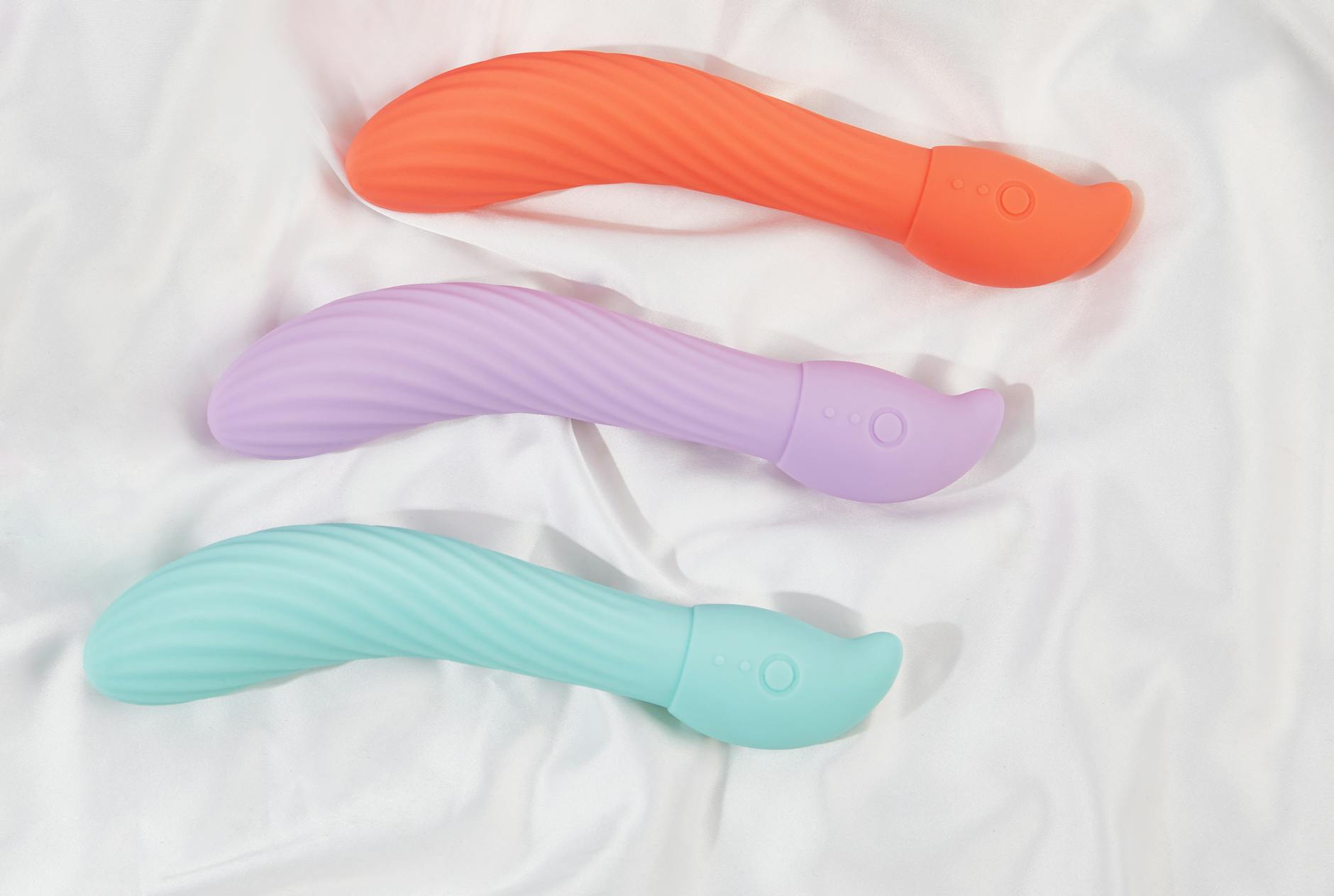
When they ask what, tell them. Say you're interested in exploring lemon vibrators, or specifically a lemon clitoral vibrator. Use the actual product name. The Lem. It makes it concrete and less vague.
Then explain why. And here's the key part: frame it around your pleasure and curiosity, not their performance. "I've read a lot about how clitoral vibrators work differently than anything else, and I'm curious what that would feel like. I think it would feel really good for me, and I'd like to explore it with you."
Very different from: "I need more stimulation than you're giving me."
What usually happens next
If your partner is curious: great. You can look at options together. Browse Hello Nancy. Talk about what appeals to you. Make it collaborative. Let them have opinions. Some partners worry the vibrator will be loud or uncomfortable to use together. Ask those questions. Give real answers.
If your partner needs time to think about it: that's completely fair. Don't push. Give them space. Come back to it in a few days. Often the hesitation dissolves once they've had time to sit with it.
If your partner seems uncomfortable: that's information, not rejection. Ask what the discomfort is about. Is it about feeling inadequate? Is it about their own awkwardness with sex toys? Is it a religious or family belief they're carrying? Those are all different conversations, and they all have different solutions.
Many partners have never been given permission to enjoy sex exploration without shame. Your openness can actually shift that for both of you.
Common worries your partner might have (and how to answer them)
"Will it make you need me less?" No. A vibrator does one thing really well: rapid clitoral stimulation. It's not a replacement for intimacy, touch, or connection. Most couples find that toys actually improve partnered sex because there's less pressure to perform and more space to feel good.
"Is this because I'm not enough?" Not even slightly. If anything, this is you saying you trust them enough to ask for what would feel good. That's vulnerability. That's intimacy.
"Won't it be weird?" First time? Maybe a little. Second time? Less. Third time? It's just part of how you two connect. Weird fades fast when you're focused on feeling good.
"What if I can't watch?" You don't have to. Some partners love watching. Some prefer to be the ones using the vibrator on their partner. Some want to feel it together but not watch. There's no script here. You figure it out together.
How to actually use it together the first time
Lower expectations. Your first time with a lemon clitoral vibrator together won't necessarily be your best time. That's normal.
Start with you in control. You know your body. You know what feels good. Your partner doesn't need to figure that out in the first session. Use the vibrator on yourself while your partner is with you, touching you in other ways. That's not selfish. That's smart.
Later, once you're both comfortable, you can hand it over. Or they can use it alongside their fingers or mouth. Or you can use it on them. The Hello Nancy Lem works beautifully for anyone with a clitoris, regardless of the body it's attached to.
Start on a lower setting. The Lem has multiple patterns. You don't need to jump to the strongest one immediately. Build into it.
Talk while it's happening. Not analysis, just honest feedback. "That feels good." "A little softer." "Keep doing that." Your partner wants to know. They want you to feel amazing.
Why lemon vibrators work particularly well for couples
The reason I often recommend lemon clitoral vibrators specifically, like the Lem, is because they're designed to be used during partnered sex. They're smaller and quieter than a lot of wand vibrators. They don't take up a ton of space. They work with penetration instead of replacing it.
If your partner is a little nervous about toys in general, starting with something smaller and more discreet can make that easier. You're not introducing a huge change all at once.
Also, a lot of partners actually really like using a lemon sucker or lemon clitoral vibrator on their partner. It puts them back in an active role instead of a passive one. They're doing something with their hands that's making you feel amazing. That's genuinely exciting for most people.
After the conversation
Once you've decided together that you want to try this, order something. Don't overthink it. Read some reviews. Pick something that appeals to you both visually. The Lem is a solid choice. So is anything from Hello Nancy, honestly.
When it arrives, look at it together if that feels right. If it doesn't, that's fine too. You don't need to make a big deal out of the unboxing.
Then, when you're actually ready to use it, make sure you have good lube. Water-based works with all silicone toys. Set aside time. Not a rushed 10 minutes. Give yourself 20-30 minutes to explore.
And here's the thing nobody tells you: the conversation is often the best part. Once you've actually talked about it, the awkwardness evaporates. You're not guessing about what your partner thinks anymore. You know. And knowing makes everything easier.
FAQ
Will using a vibrator with my partner make me unable to orgasm without it?
No. This is one of the biggest myths, and it's completely untrue. Orgasm capacity doesn't work that way. If anything, exploring what different types of stimulation feel like makes you more orgasmic overall because you understand your body better. You might find you prefer the vibrator in some contexts and your partner's touch in others. That's normal and healthy.
What if my partner wants to use it on me but it doesn't feel good when they're doing it?
That's not a rejection of them. Your body is incredibly specific about what it likes. You might need them to use a different angle, pressure, or pattern. Show them. Put your hand over theirs. Guide them. You're not criticizing. You're collaborating.
Is it okay to use a lemon vibrator if we haven't been having regular sex?
Actually, yes. Sometimes introducing something new can be the spark that reignites physical connection. But here's the thing: if the relationship isn't working overall, a vibrator won't fix that. If you haven't been intimate and the reason is distance or disconnection, that's a different conversation than "I want to try something new in bed." Don't use a vibrator as a Band-Aid for a bigger relationship problem.
How do I bring this up if my partner already rejected the idea once?
First, ask why they rejected it. What was the actual objection? Then address that specific concern, not the vibrator in general. If they said no because they felt threatened, that's a relationship conversation worth having with someone like me. But if they said no because they thought it would be weird or uncomfortable, those are solvable problems. You can revisit it in a few months with new information.
What if my partner wants to use a vibrator but I'm nervous about it?
Your nervousness matters too. You don't have to dive into anything you're uncomfortable with. Start small. Watch your partner use it on themselves first, if you want. Learn what it does. Ask questions. Most nervousness comes from not understanding something. Understanding usually dissolves it.
Can we use a lemon clitoral vibrator during penetration?
Completely depends on the position and what feels good to both of you. Some positions allow it easily. Others don't. The first time you try it, you'll figure out what works for your bodies. The Lem is small enough that it doesn't get in the way, which is why it's popular for couples specifically.
The real truth
Introducing a lemon vibrator to your partnership isn't a red flag or a risk. It's an act of trust. You're saying "I want to feel good, and I want you there while I do." That's actually really intimate.
Most partners respond to that. They want you to feel amazing. They want to be part of that. The conversation you're dreading is almost certainly going to go better than you think.
Ready to have it? Start with coffee and honesty. Everything else follows from there.