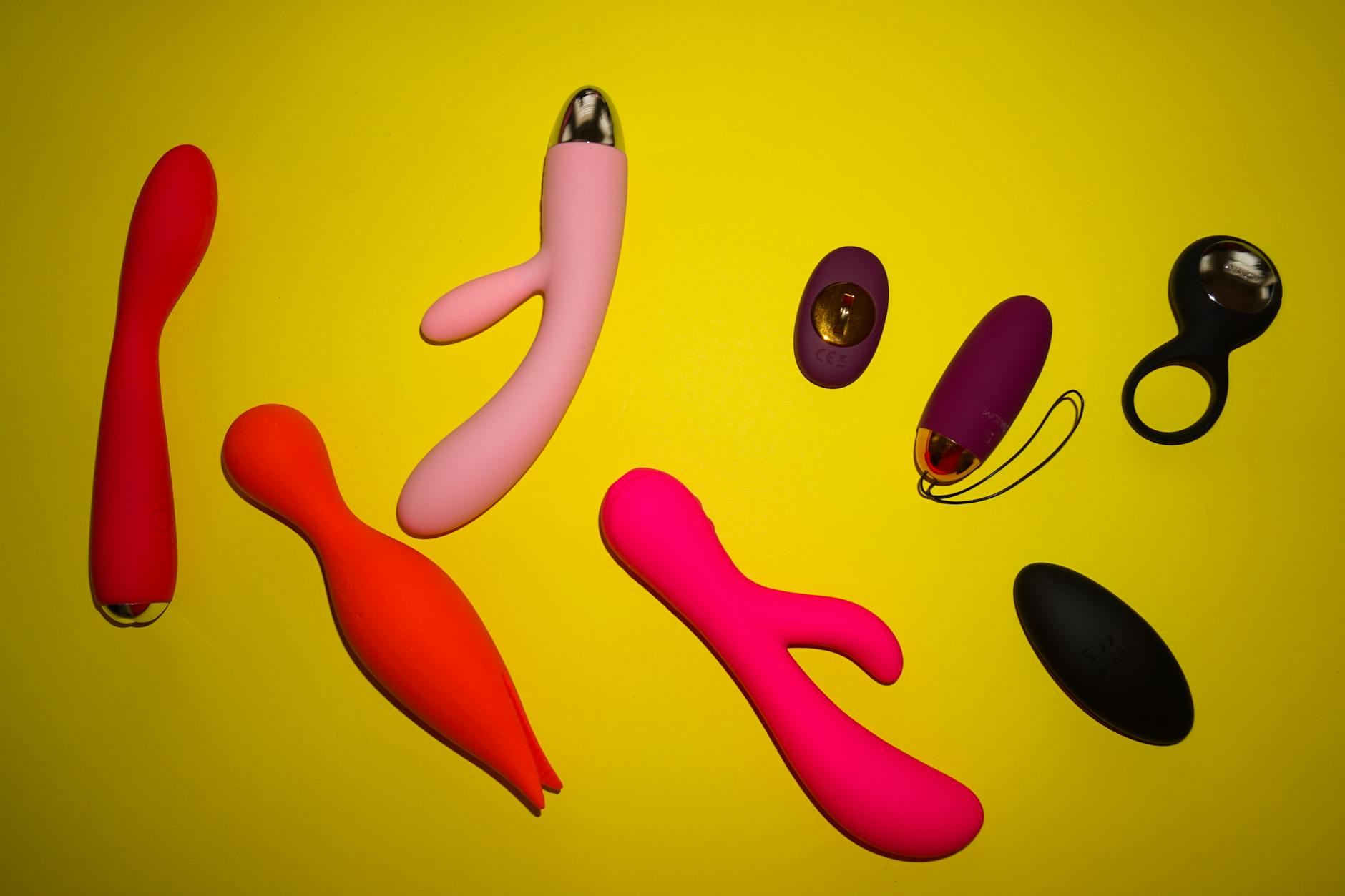
Here's what nobody tells you about lemon vibrators
You bought a lemon vibrator, turned it on, and immediately thought: this is way too much. Your clitoris is not broken. You're not "doing it wrong." The device isn't faulty. What's actually happening is that suction-based clitoral vibrators work on a completely different neural pathway than the buzzing vibrations you might be used to, and jumping straight to setting 3 or 4 can feel like someone cranked the volume from zero to stadium-loud.
Let me be clear: most people with vulvas can handle lower intensity for longer periods and get better orgasms than they ever did with full-throttle traditional vibrators. This is not a limitation. It's actually the design working exactly as intended.
Why lemon vibrators feel more intense than they actually are
A traditional vibrator (like a wand) moves back and forth rapidly across the skin. Your nerve endings experience stimulation spread across surface area. When you add lemon technology, suction changes the game completely. Instead of vibration, you get gentle pulsing pressure that draws blood to the clitoris, engorges the tissue, and stimulates the entire nerve cluster all at once.
This concentration of stimulation is why people often report that intensity 2 on a lemon vibrator feels comparable to intensity 5 on a traditional device. You're not comparing decibels. You're comparing neural activation patterns. Suction hits different because it's hitting deeper and more directly.
The clitoris has about 8,000 nerve endings concentrated in a space smaller than a pea. Traditional vibration spreads that stimulation. Suction focuses it. Same power consumption. Wildly different sensation.
Start absurdly low and work up slowly
I recommend starting every single person on setting 1, no exceptions. Not because I'm being cautious. Because setting 1 gives your body time to adjust to a completely new sensation pattern without overwhelming your nerve endings.
Here's the actual protocol: turn it on at setting 1, apply it gently to your vulva (not directly on the clitoris yet), and notice what you feel. You should feel a gentle pulsing sensation, almost like a soft heartbeat. If that's pleasant, stay there for a few minutes. Your clitoris will start to respond, blood will flow, and the tissue will begin to engorge.
Once you feel aroused (or after about 5 minutes, whichever comes first), you can try positioning the device directly over your clitoris. Still at setting 1. Notice the sensation. Is it building pleasure? Keep going. Does it feel too intense? Stay here until it doesn't. Does it feel like nothing? You can experiment with slight angle adjustments before moving to setting 2.
This is not slow. This is smart. You're teaching your nervous system to recognize a new type of pleasure, and that takes actual minutes, not hypothetical time.
Why intensity settings matter more than power
Most lemon vibrators have between 3 and 7 intensity levels. People often assume that means "one setting per person," and if the middle setting feels overwhelming, they're screwed. That's backwards thinking.
Each intensity level isn't just "more power." It's often a different pulse pattern. Lower settings might pulse at 30 pulses per second. Mid-range might shift to 60. Higher might introduce micro-rhythms that build sensation differently. The difference between settings 2 and 3 isn't necessarily "louder." It's often "more rhythmic" or "faster."
This matters because your pleasure response changes depending on arousal level, time of cycle, stress, medication, and a hundred other variables. The same person might love setting 2 on a Tuesday and need setting 1 on a Thursday. That's not a sign of dysfunction. That's evidence that intensity matters and that having options is the actual advantage.
When you should stay low permanently
Some people find their home on setting 1 or 2 and never need anything else. This is completely normal. If you can reach orgasm reliably at lower intensity, moving higher is not "progress." It's just different. There's no achievement unlocked by hitting setting 5 if setting 2 gets you there faster and feels better.
Stay low if: arousal builds quickly at lower settings, orgasms feel full and satisfying, and you're not chasing sensation. This is actually the sweet spot. Lower intensity means longer sessions without numbness, more control over your pace, and the ability to build multiple orgasms without desensitization.
How to progress intensity without losing sensation
If you want to explore higher settings, do it intentionally, not out of frustration. The rule is: increase intensity by one level at a time, and only when the current level stops building pleasure.
Here's what progression actually looks like. Spend 5-7 sessions at setting 1. Notice what happens. Your clitoris adapts slightly. Sensation might feel less surprising. That's your signal to try setting 2 for one session. If it feels right, great. Use setting 2 for the next 5-7 sessions before considering level 3. If setting 2 feels weird, go back to setting 1. There's no rule that says you must climb the ladder.
Skipping this step is how people end up saying "the lemon vibrator stopped working for me." They didn't lose sensation. They just jumped to high intensity too fast, their nervous system adapted, and now lower settings feel boring. Then they get stuck at high intensity, which requires desensitization breaks, which is annoying. Start slow, progress slowly, stay where the pleasure is.
The role of angle, pressure, and positioning
Intensity is not the only variable that matters. Actually, it's often not even the most important one.
How you position a lemon vibrator changes everything. Direct contact on the clitoral glans might feel too strong even at setting 1. Positioning it so the suction covers the entire vulva (clitoris plus the tissue around it) distributes sensation and often feels softer despite being the same power level. Some people prefer the device angled slightly off-center. Others want full contact. Neither is wrong.
Pressure also matters. Gentle resting pressure is different from pressing hard. With suction technology, you usually don't need to press at all. Let the device do the work. The suction creates the sensation. Your hand is just positioning it.
You can also adjust the opening of the suction cup itself on some designs. A smaller opening concentrates sensation. A wider opening spreads it. If you find even setting 1 overwhelming, check whether the device has adjustable intensity or alternative positioning options before deciding it's not for you.
When to use lube and when you might not need it
Lube is always optional with lemon clitoral vibrators (unlike penetrative toys). Some people find that a tiny bit of water-based lube on the vulva helps the suction feel smoother and more even. Others prefer direct contact.
If intensity feels overwhelming, lube might help. A thin layer of lube can soften the intensity slightly while still allowing full sensation. It's not life-changing, but it's worth trying. Use water-based only, because silicone lube can degrade the silicone body of most lemon vibrators.
Don't use lube as a band-aid for poor positioning or too-high intensity. Use it as an optional tweak when everything else feels right but you want slightly softer contact.
The plateau problem and how intensity factors in
Some people hit a point where their chosen intensity level stops building pleasure. Sensation plateaus. This is not desensitization yet. It's your nervous system saying "okay, I recognize this pattern now." The fix is not always to turn the dial up.
Try changing your approach instead: different position, angle adjustment, or adding lube. Try taking a 2-3 day break and coming back to the same setting. Try using it differently than you normally would. If you've been using it for 20 minutes, try 7 minutes instead.
Only after exhausting those options should you consider moving to the next intensity level. And if you do, plan a 3-5 day break after to reset your baseline.
Common mistakes that feel like intensity problems
People often adjust intensity when the actual issue is something else entirely. Here's what I see clinically.
Mistake 1: Not leaving enough warm-up time. Jumping to setting 2 when your clitoris isn't engorged yet will feel intense because the tissue isn't ready. Spend time at setting 1 first.
Mistake 2: Starting on the wrong part of the vulva. Direct clitoral contact at any intensity can feel shocking. Begin on the mons pubis or inner labia and move toward the clitoris gradually.
Mistake 3: Pressing too hard. The device does the work. Your hand is not applying pressure in directions other than positioning it.
Mistake 4: Using it when stressed or distracted. A racing mind makes everything feel too intense because your nervous system is already activated. Intensity feels high because you're not fully present.
Mistake 5: Comparing to previous sessions. If you had an amazing orgasm at setting 2 last week and this week setting 2 feels meh, you're not desensitized. You're just having a different session. Pleasure is not linear.
FAQ: Intensity and lemon vibrators
Why does my lemon vibrator feel so strong compared to my old vibrator?
Suction technology concentrates stimulation directly on your clitoral nerve cluster, while traditional vibrators spread sensation across surface area. Same power consumption, different neural pathway, and it feels significantly more intense as a result. Most people adapt within 3-5 sessions at lower intensity levels.
Can I damage my clitoris by using high intensity on a lemon vibrator?
No. Your clitoris is resilient tissue. What happens with overuse of high intensity is desensitization (temporary numbness), not damage. If you notice that setting 5 no longer produces sensation, that's a sign to take a 3-5 day break and return to lower settings. Your sensitivity will return.
Should I be able to use a lemon vibrator the same way I used my old vibrator right away?
No. Expect an adjustment period of 1-2 weeks where you're learning how suction feels on your body. This doesn't mean the device is wrong for you. It means your nervous system is learning a new sensation pattern. Be patient with that process.
What if every intensity level feels too strong?
Try positioning adjustments first: move the device off direct clitoral contact, angle it slightly, or apply less pressure. Use a thin layer of water-based lube. Extend your warm-up time. Take 2-3 minute breaks between sessions. If it still feels overwhelming after those tweaks, the device may not be the right fit for your body, and that's fine. Different toys work for different people.
Can I mix intensity levels during one session?
Absolutely. Start at setting 1, build arousal, move to setting 2 when you're ready, and cycle back down if you need to. Your pleasure doesn't have to be linear. Some people build to orgasm with a pattern like: 1, 2, 1, 3, 2, orgasm. Your body knows what it needs.
How do I know if I'm desensitized or just bored?
Desensitization feels like sensation is numb or absent even at higher intensities. Boredom is when sensation is fine but no longer exciting. They feel different. Desensitization is solved by taking a break. Boredom is solved by changing your approach, positioning, or timing. If you're uncertain, take a 3-5 day break and see if sensation returns. It usually does.
The actual goal here
The whole point of understanding intensity with lemon vibrators is to find the sweet spot where you reach orgasm reliably without effort, without numbness, and without needing to chase higher and higher levels. That sweet spot is probably lower than you think.
Start at setting 1. Spend actual time there. Progress slowly. Notice what your body tells you. If you find that setting 1 or 2 is home, that's not a limitation. That's you winning. You've found an approach that works, feels good, and doesn't require desensitization breaks.
Your clitoris is not broken if standard intensity feels overwhelming. You're just more sensitive than the baseline, or you're using technology that works differently than what you've tried before. Both are fine. Adjust accordingly and enjoy the lower-intensity pleasure that most people never discover because they jump straight to maximum power.
If you want more guidance on finding your rhythm with a lemon clitoral vibrator, reach out. I'm here to help you figure out what actually works for your body, not what's "supposed" to work.
Contact Hello Nancy if you have questions about device selection or technique.