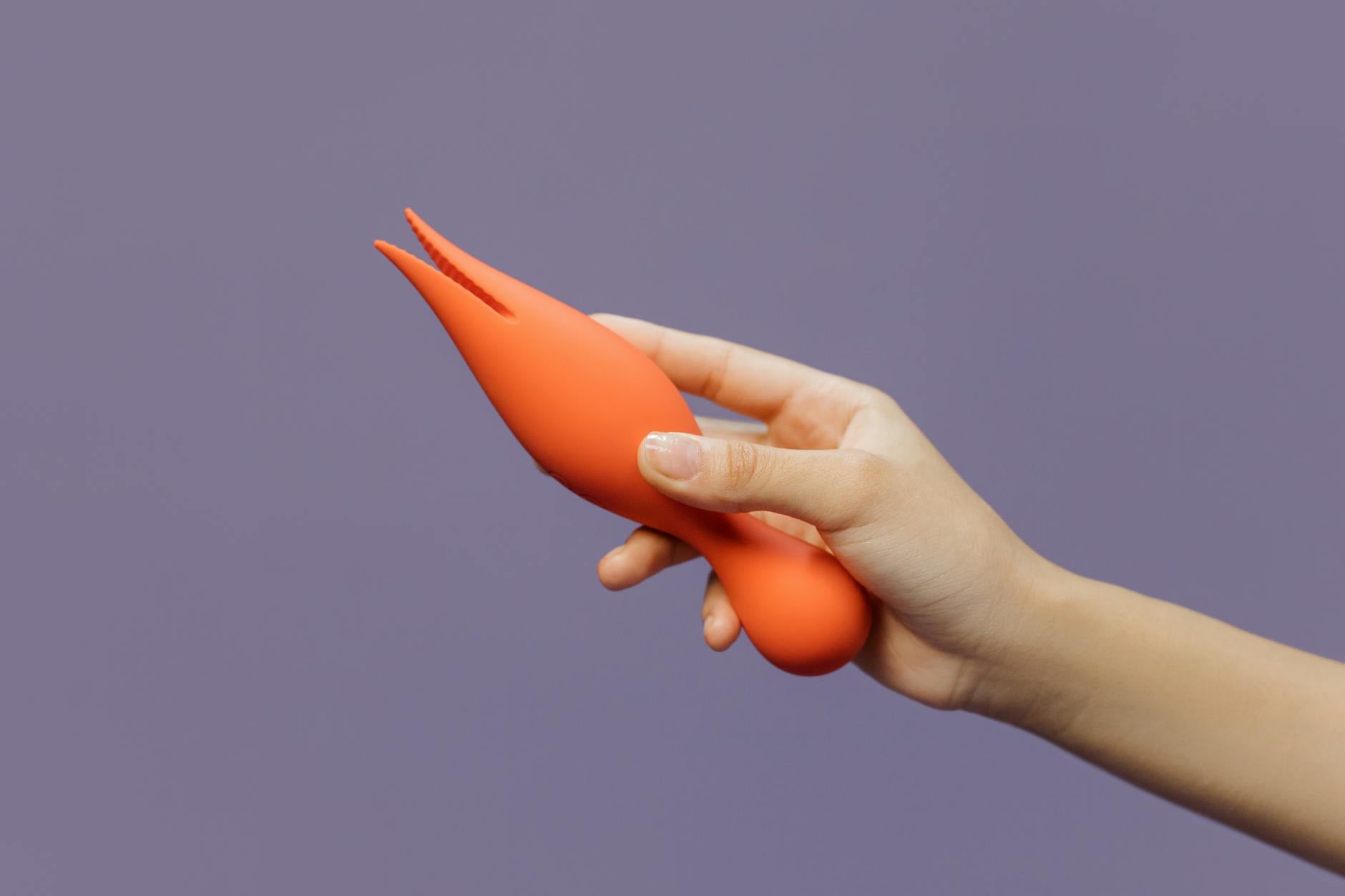
Let's start with the obvious part
If your clitoris feels too sensitive for most toys, you're not alone. And you're definitely not broken. Sensitivity is actually common, especially if you've had a lot of direct stimulation over time, or if your body's natural wiring just means that spot is more reactive. The good news is that a lemon vibrator, with its air-suction design, is genuinely better suited to sensitive tissue than most other clitoral vibrators out there.
The reason is mechanical. Traditional vibrators work through friction and direct percussion against the clitoris. A lemon clitoral vibrator uses gentle suction and waves instead, which means less pressure and more control. But technique still matters enormously. You can't just crank it to pattern 5 and hope for the best. Here's the exact playbook.
Understanding why your clitoris feels this way
Before we jump to solutions, it helps to know what's happening. Clitoral sensitivity has a few common causes.
First, there's cumulative stimulation sensitivity. If you've been using intense toys or masturbating frequently for years, your nerve endings adapt. They need more input to feel the same sensation. This doesn't mean you're desensitized forever, but it does mean your clitoris has raised its baseline threshold.
Second, there's natural sensitivity. Some people are just wired this way. Thinner tissue, more nerve density, or a combination of both means that standard vibration intensity registers as too much. This is genetic variation, not dysfunction.
Third, there's hormonal sensitivity. If you're in a cycle phase where estrogen is lower, or if you've gone through hormonal changes, tissue thickness and sensitivity to touch shift. Postmenopausal people often experience heightened sensitivity despite thinner tissue, which sounds paradoxical but happens because the tissue is more reactive when it's less protected.
Knowing which one applies to you helps you pick the right approach.
Why a lemon clitoral vibrator is actually ideal for sensitive tissue
I want to be clear about this because it matters. A lemon vibrator's suction mechanism is fundamentally different from traditional vibration. Instead of buzzing directly against your clitoris, the Lem creates gentle pressure waves that stimulate the entire clitoral structure, not just the surface.
This has three huge advantages for sensitive bodies:
First, you control the intensity differently. You're not adjusting a vibration amplitude, you're adjusting a suction pressure. Lower patterns on a lemon sucker feel like a soft pull rather than a persistent buzz. That's much easier to tolerate and to escalate gradually.
Second, the sensation is more dispersed. Instead of all the stimulation landing on one small spot, suction washes across the whole external clitoral area. This distributes nerve activation instead of concentrating it.
Third, you can use indirect contact. You don't have to place the Lem directly on your clitoris. You can angle it, hover slightly, or position it against the hood or surrounding area. This is the secret move that most people don't know about, and it completely changes the experience for sensitive people.
The exact technique for sensitive clitori
Here's the step-by-step approach I recommend to clients with sensitive tissue.
Step 1: Start with wet fingers. Before you even touch the vibrator to your body, spend three to five minutes on manual stimulation with fingers. Use lube, go slowly, and let your clitoris wake up at its own pace. This is not foreplay to something else. This is the warm-up that signals to your body that it's safe to become aroused. Your clitoris will gradually feel less defensive.
Step 2: Apply plenty of water-based lube. This matters more for sensitive tissue than it does for anyone else. Lube reduces friction, protects delicate tissue, and makes the sensation feel different. It's not optional.
Step 3: Start with pattern 1. Not pattern 2, not somewhere "moderate." Pattern 1. Many people with sensitive clitori find that even the lowest setting on a standard vibrator is overwhelming. The Lem's pattern 1 is genuinely gentle. It should feel like a soft, rhythmic tug rather than intense stimulation. If it still feels like too much, you can try hovering the Lem just above your clitoris instead of making full contact. You'll still feel the sensation, but it's muted.
Step 4: Use the hood positioning. This is the game-changer. Instead of placing the Lem directly on your clitoral head, position it slightly over the clitoral hood (the tissue that covers your clitoris). The sensation travels through the hood to reach your clitoris, but it's filtered and less intense. This technique lets sensitive people use higher patterns because the intensity is already reduced by one layer of tissue.
Step 5: Stay with pattern 1-2 for at least two weeks. Your nervous system needs time to adjust to a new tool. Even though the Lem is gentler than other options, it's still novel to your body. Consistent, low-intensity exposure helps your clitoris desensitize to the point where pattern 2 or 3 feels comfortable and more pleasurable.
Step 6: Never skip the ramp-up. The temptation is to jump straight to the Lem. Don't. That five-minute manual warm-up makes everything that follows better and less overwhelming.
When you're ready to experiment with higher patterns
After two to three weeks of consistent use at patterns 1-2, you might feel ready to try something with a bit more intensity. The transition should still be slow.
Start a session at pattern 1. Let it build pleasure for a few minutes. Then, switch to pattern 2 for just 30 seconds. Go back to pattern 1. Try pattern 2 again for 45 seconds. This alternation lets your body recalibrate between intensities instead of suddenly jumping into something that shocks your system.
Some sensitive people find their sweet spot at pattern 2. Others eventually move to pattern 3 or 4. Some stay at pattern 1 forever, and that's completely fine. The goal isn't to reach some arbitrary "normal" intensity level. It's to find what produces pleasure for you.
The recovery breaks that sensitive tissue needs
If you're using a lemon vibrator regularly and your clitoris is sensitive, you might notice that after a few days of daily use, it starts feeling numb or sore. This is overuse sensitivity, and it's your body asking for rest.
I recommend one full day off per week minimum when you're starting out. No toy, no manual stimulation, nothing. Let the tissue recover. As your clitoris becomes accustomed to the lemon vibrator's patterns, you might need fewer breaks, but in the beginning, rest days are essential.
If you notice soreness or pain, that's a signal to stop and see a healthcare provider. Sensitivity and pain are different things. Sensitivity can feel intense but pleasurable. Pain is never okay. A doctor can rule out lemon vibrator pain during sex or other tissue issues.
Pairing the lemon vibrator with partner play
If you want to use a clitoral vibrator during sex with a partner, sensitive tissue requires extra attention.
First, communicate specifically about sensation. "This feels intense" is useful feedback, but "I like pattern 1 with the hood positioning and soft contact" is instructions. Your partner can't read your clitoris. They need your words.
Second, use the lemon vibrator as foreplay, not during intercourse. Let the vibrator bring you close to orgasm, then switch to other forms of stimulation. This takes pressure off your sensitive tissue to perform during penetrative sex while still building arousal.
Third, go back to the hood positioning during partnered sex. It's less obvious than direct contact, and it often feels less intense while remaining effective. Your partner can hold the Lem in that position while you focus on other sensations.
If you're in a long-distance relationship, a lemon vibrator can absolutely be part of that dynamic, though remote controls and app-based patterns might need different positioning strategies for sensitive tissue.
The role of lubrication in sensitivity
This deserves its own section because lube is not optional for sensitive clitori, and the type matters.
Water-based lube is always your first choice with a lemon vibrator. It's gentle, easy to reapply as needed, and doesn't degrade silicone. Hyaluronic acid-based lubes (which are technically water-based) feel particularly good on sensitive tissue because they mimic natural lubrication.
Silicone-based lubes feel richer and last longer, but they can damage your lemon vibrator over time. Skip them.
Oil-based lubes are fine on skin but can also degrade silicone and are harder to wash off. They're a no for toys.
For sensitive clitori, I recommend applying lube generously and reapplying every few minutes during use. More lube means less friction, and less friction is the entire point.
FAQ: Sensitive clitoris and lemon vibrators
Can my clitoris become permanently desensitized from using a lemon vibrator?
No. Desensitization from vibrators is temporary and reversible. If you take a break of a few days to a week, your clitoris will become responsive again. The nervous system in your clitoral tissue adapts to repeated stimulation, but it doesn't break. That said, if you're sensitive to begin with, cycling through different toys or taking breaks more frequently helps you maintain responsiveness long-term.
Is it normal to feel soreness after using a lemon vibrator if I'm sensitive?
Mild soreness from vigorous use is normal and usually passes in a day or two. But sharp pain or persistent soreness is not normal and worth investigating. See a doctor to rule out tissue damage or micro-abrasions. For sensitive people, this often means you're using intensity that's genuinely too high or the friction is too much. Scale back to a lower pattern or try the hood positioning technique.
If pattern 1 still feels too intense, what else can I do?
Try hovering instead of full contact. Position the Lem just above your clitoris or against the hood with no direct pressure. You'll still feel the suction, but it's muted. You can also alternate: use pattern 1 for 30 seconds, take a 30-second break, repeat. This spacing helps your nervous system process the sensation without becoming overwhelmed.
Does hormonal birth control affect clitoral sensitivity?
Yes, sometimes. Some people find their sensitivity changes on hormonal contraception. If you start a new birth control and notice your clitoris feels different, give it two to three months for your body to adjust before assuming it's permanent. If sensitivity doesn't improve or gets worse, talk to your doctor about switching methods.
Can I use a lemon vibrator more frequently if I want to build tolerance and reduce sensitivity?
More frequent use doesn't necessarily reduce sensitivity, especially for people who are naturally sensitive. It might actually increase nerve fatigue. The better approach is consistent, moderate use at a comfortable intensity level, combined with adequate rest days. Quality beats frequency.
What if my sensitivity is emotional or anxiety-related, not physical?
Then a lemon vibrator can still help, but the technique shifts. If you're tense or anxious about sensation, the warm-up phase becomes even more important. Spend longer on manual stimulation, keep your eyes closed if that helps, use low patterns, and focus on breathing rather than outcome. A lemon vibrator can actually help when anxiety blocks pleasure because the gentle suction is less performative than other toys. You're not trying to "conquer" the sensation. You're just letting it happen.
The bottom line
A sensitive clitoris is not a barrier to using a lemon vibrator. It's just a parameter that changes your approach. Start low, go slow, use plenty of lube, position thoughtfully, and give your body time to adjust. Most sensitive people find their rhythm within two to three weeks. Your pleasure absolutely matters, and there's a technique that works for your body. You just have to find it.
Have questions about your specific situation? Get in touch with our team and we can help you troubleshoot.
References
Freeman, E. W. (2010). "Associations of depression with the transition to menopause." Menopause, 17(4), 823-829.
Darling, C. A., & Davidson, J. K. (1986). "Coitally orgasmic women: Sexual characteristics and social/psychological influences." The Journal of Sex & Marital Therapy, 12(3), 206-214.
Levin, R. J. (2003). "The clitoris: An appraisal of its reproductive functions over the life course." International Journal of Impotence Research, 15(Suppl 5), S16-S25.