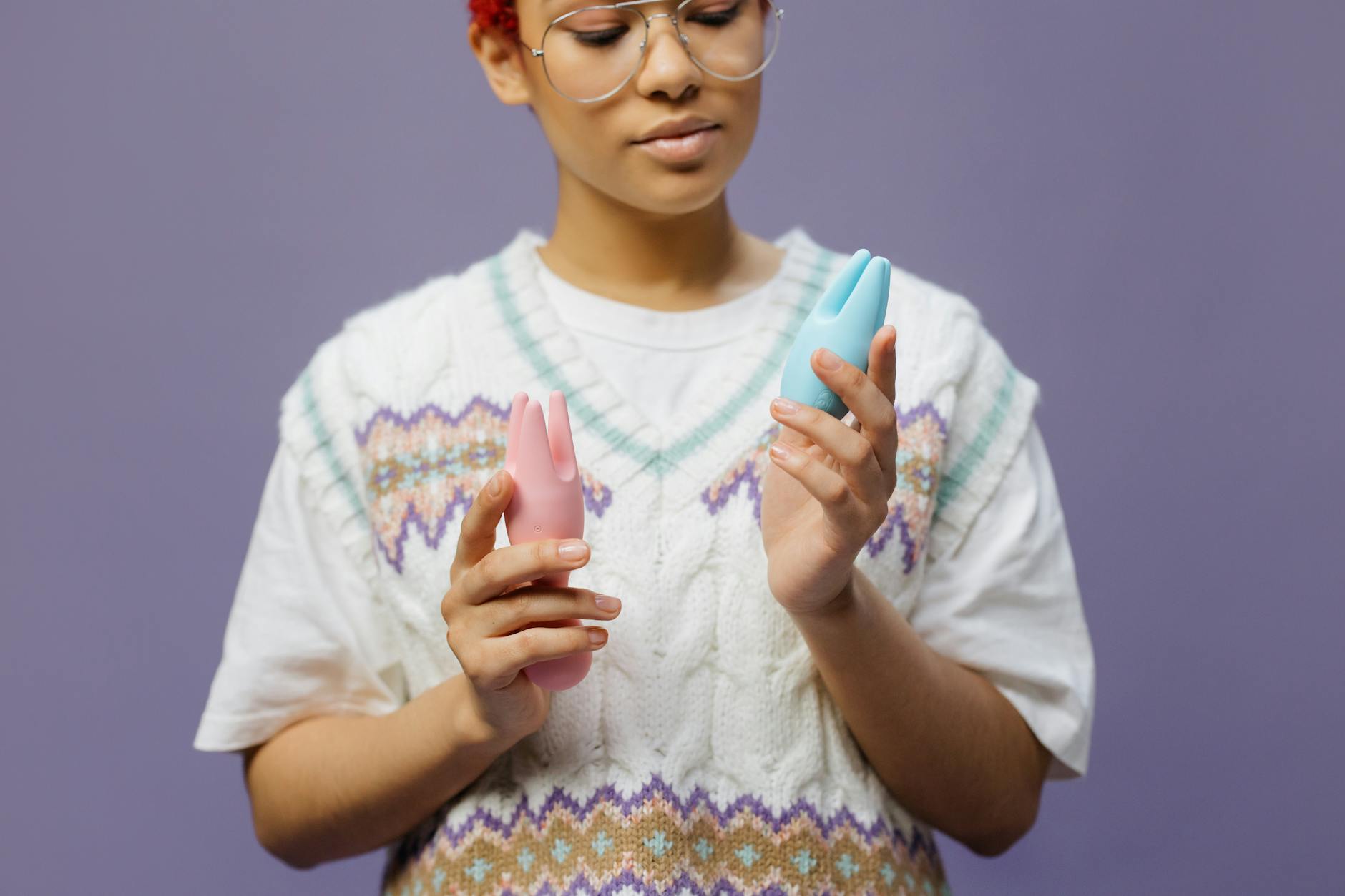
Let's be real about stress and intimacy
Work destroys couples' sex lives faster than anything else nobody talks about. One of you is traveling. The other is managing a deadline that won't end. You're both checking email at 10 p.m. By the time you collapse into bed, the thought of sex feels like another task on an impossible list.
This isn't a desire problem. It's not that you stopped loving each other. It's that your nervous systems are both in fight-or-flight mode, and your bodies have forgotten what it feels like to relax together.
Here's what I see in my practice: couples who introduce a lemon vibrator specifically to ease back into intimacy after a high-stress period report that it removes the performance pressure. Instead of sex feeling like something you have to do, it becomes something you get to do. Small difference in wording. Huge difference in results.
Why work stress kills sex before desire does
When you're stressed, your cortisol stays high. High cortisol suppresses arousal hormones and keeps your pelvic floor tight. You're not less attracted to your partner. Your body literally can't access the nervous system state needed for pleasure. You could want sex and still find your body won't cooperate.
Add to that the cognitive load of work stress. The part of your brain that handles planning and worry is competing with the part that handles sensation and presence. You're never fully there.
Then there's the timing mismatch. One partner is asleep by 9 p.m. The other gets a second wind at 11. You're trying to coordinate schedules that don't exist. Sex starts feeling like a logistical problem instead of a connection.
A lemon clitoral vibrator changes the equation. It doesn't require you to be in peak arousal when you start. It doesn't depend on your partner being able to maintain an erection or spend 45 minutes. It's a tool that helps both of you drop into sensation faster, which means you actually can reconnect even when you're not at your best.
The permission shift
Here's something that surprises most couples: once you agree to use a lemon vibrator during partnered sex, you both relax. The pressure vanishes. You're not trying to be enough for each other. You're collaborating with a tool that amplifies sensation for both of you.
This matters because stressed couples often fall into a pattern where sex becomes about proving you still care instead of about actual pleasure. Using a vibrator together reframes the whole thing. You're not performing. You're exploring. Your partner isn't responsible for your orgasm. You're both in it together, but with less weight on anyone's shoulders.
I've had couples tell me that using a lemon vibrator was the first time they had partnered sex without checking the time. That alone is huge.
How to actually restart this conversation
The most common mistake couples make is introducing a vibrator when they're in the middle of the stress cycle. You bring it up when you're both fried, neither of you has energy, and it lands as "we need to fix this." That's not going to work.
Instead: pick a moment when the acute stress has lifted even slightly. Not when everything's perfect, but when you're not actively drowning. A Saturday morning. After a vacation. When one major deadline has passed.
Then say something like this: "I've been thinking about us. I know we've both been overwhelmed. I don't want sex to feel like another thing we're failing at. What if we tried something that might make it easier to reconnect without the pressure?"
That's it. You're naming the real problem, which builds trust. You're offering a solution that benefits both of you. You're not blaming. You're collaborating.
If your partner says yes, you might explore a lemon clitoral vibrator together. If they seem hesitant, ask what concerns them. Often it's not about the vibrator itself. It's about feeling like you're not enough. That's the real conversation to have.
Practical setup for busy couples
If you're both stressed and time-poor, you need a plan that doesn't add complexity.
First: keep the lemon vibrator accessible. Nightstand drawer. Not hidden, not a secret. This alone removes friction and shame. If getting it takes three minutes and a conversation, it won't happen when you're already struggling to make time for sex.
Second: start without expectations about outcomes. You're not aiming for orgasm. You're aiming for touch and presence. Some nights you'll use the vibrator for five minutes. Some nights for longer. Some nights you'll start with it and then switch to other touch. All of that is success.
Third: schedule sex without it being weird. I know that sounds unromantic, but when you're both stressed, spontaneity becomes another thing you're waiting for that never arrives. A loose plan actually removes anxiety. "Saturday morning before errands" works better than hoping something happens.
Fourth: remember that lemon vibrators work with many types of stimulation, not just solo. Your partner can use it on you while you're inside them. You can use it on your partner and then they engage with you. There's no single "right way." Explore what feels good.
When to know it's working
You'll notice a shift before you notice more frequent sex. You'll notice you're touching each other in non-sexual ways again. You'll laugh during intimacy. You'll make eye contact. Your partner will initiate a conversation about the lemon vibrator without defensiveness.
These are signs that the stress cycle is breaking. You're no longer in emergency mode. You're connecting.
The frequency of sex might still be lower than it was before work got insane. That's fine. You're not trying to get back to some fantasy version of your relationship. You're trying to remember that you like each other and want to be physical together.
The deeper work still matters
A lemon vibrator is a brilliant tool for couples rebuilding intimacy after stress. But let's be clear: if the stress never decreases, the sex will always be fragile.
Using a clitoral vibrator together can ease you back in. But it can't solve the underlying problem of one or both of you being perpetually exhausted and overwhelmed. That requires actual changes. Maybe it's therapy for stress management. Maybe it's having a real conversation about work boundaries. Maybe it's couples counseling to figure out how you're both showing up.
The vibrator is the bridge. The real work is building a life where you're not always in crisis.
But in the meantime, while you're doing that deeper work, a lemon vibrator can help you stay connected. It can remind you that pleasure is still available. It can keep the light on between you while you're figuring out the bigger stuff.
What to actually buy
If you're starting out, you don't need the fanciest option. A basic lemon clitoral vibrator gives you multiple settings, is quiet enough for partners who are sensitive to noise, and is designed specifically for external stimulation. It works for most people's bodies and most types of partnered sex.
Many couples find that having one vibrator you both use together is actually better than each having your own. It's a shared tool, which changes the psychology. You're not competing. You're collaborating.
If you're nervous about it, that's normal. Bring it up. Check in. Read about how clitoral vibrators work together with partnered sex. Knowledge removes a lot of the awkwardness.
FAQ: Couples, work stress, and rebuilding intimacy
What if my partner is resistant to using a vibrator?
Resistance usually isn't about the vibrator. It's about feeling like you're not enough, or that adding a tool means something is wrong. Have that conversation first. "I want to use this because I want more of you, not less." "This isn't about fixing you. It's about us exploring together." If your partner stays resistant after a real conversation, couples therapy can help you both understand what's underneath.
How often should we use a lemon vibrator if we're rebuilding intimacy?
There's no "should." Start with once a week or every other week if you can manage it. The goal is consistency, not frequency. Once a week for three weeks matters more than three times in one week. Build a pattern so it feels normal and expected, not like a special occasion.
Can using a vibrator together make us depend on it?
Not really. If anything, the opposite happens. Once you've reconnected sexually a few times with a vibrator, the pressure decreases. You remember what sex together actually feels like. Then you might use the vibrator sometimes and not others. It becomes one tool in your toolkit, not a requirement.
My partner and I have different arousal speeds. Will a lemon vibrator help?
Yes. Often the partner who takes longer to arouse feels pressure about that. A vibrator can help the faster partner stay engaged while the other person catches up, or it can give both of you sensation simultaneously so nobody's waiting. Check out our post on partners with different arousal speeds for more.
What if we use a lemon vibrator and I still don't orgasm?
Remember: orgasm isn't the goal when you're rebuilding intimacy after stress. Connection is. Pleasure is. Presence is. If you're having sex, you're touching, you're both engaged, and you feel closer afterward, that's success. Orgasm might come. It might not. Both are okay.
Is it weird to introduce a vibrator when our sex life was fine before?
Not at all. Your sex life was fine before work stress broke it. Using a vibrator isn't an admission of failure. It's a recognition that right now, you both need something that makes reconnecting easier. Once the acute stress period passes, you might use it less or differently. That's how real couples navigate real life.
The point
Work stress doesn't end relationships that matter. But it does erode the physical connection that keeps couples close. A lemon clitoral vibrator can't solve the stress, but it can keep you connected while you're dealing with it.
The vibrator itself isn't magic. What's magic is giving yourself permission to need help, and choosing a tool that makes intimacy feel possible instead of impossible. That's what brings couples back to each other.