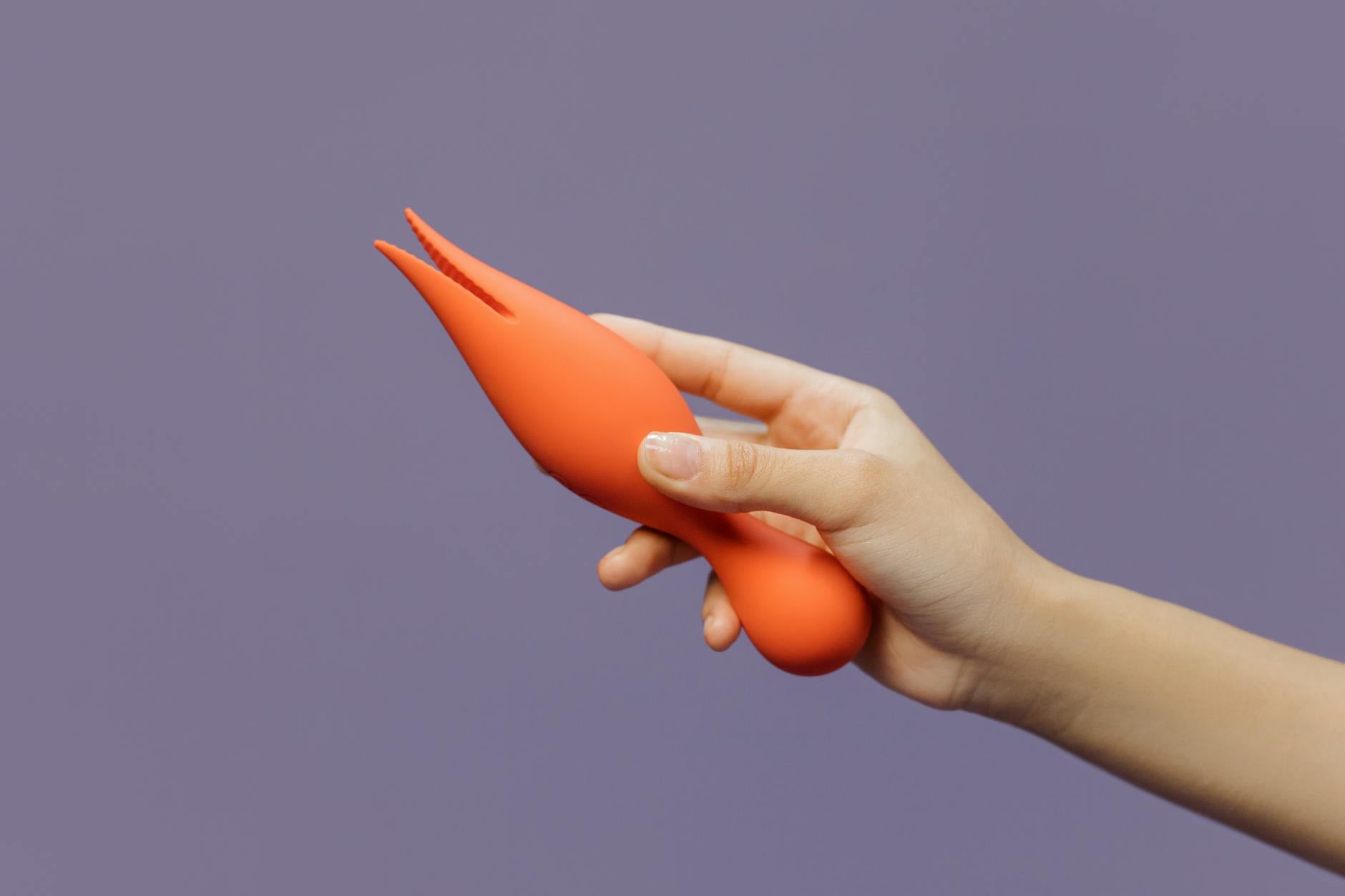
Why Your Lemon Vibrator Feels Different After Starting Antidepressants
You started SSRIs for anxiety or depression, and suddenly your pleasure isn't cooperating anymore. Your lemon vibrator, which used to get you there reliably, now feels muted. Your body takes longer to respond. Orgasm either doesn't happen, or it's flatter than it used to be.
This isn't in your head. It's not a sign you're broken or that the medication is failing you. Sexual side effects from SSRIs are real, common, and almost completely fixable once you understand what's happening.
What SSRIs actually do to your sexual response
Here's the basic mechanism. SSRIs (selective serotonin reuptake inhibitors) work by increasing serotonin availability in your brain. That's excellent for mood and anxiety. But serotonin also plays a role in sexual arousal and orgasm. More serotonin, in some people, dampens those signals.
Specifically, SSRIs can affect three parts of the sexual response chain.
First, arousal itself slows down. Your brain doesn't ramp up into desire as quickly. You might find you're not mentally interested in sex, or it takes longer to get mentally interested. This is the "motivation" piece.
Second, your body's physical response to stimulation flattens. When you use a lemon clitoral vibrator, the suction sensation that used to feel intense and immediate now feels softer. Your blood flow takes longer to reach your genitals. Your tissues don't swell the way they did before.
Third, and this is the one most people notice immediately, reaching orgasm becomes harder. Some people find they can still orgasm but it takes longer. Others find the orgasm itself feels less intense, more like a gentle release than an explosion. And some people, for the first time in their lives, experience delayed or absent orgasm entirely.
None of this means your clitoral sensitivity has disappeared. It means the neurochemical pathway that lights up those sensations has been dampened.
Why your lemon vibrator specifically feels different
A lemon sucker works through suction, not direct vibration. That means it relies more heavily on sustained arousal and blood flow than a traditional vibrator does. Your clitoris has to fill with blood for the suction to feel effective. If SSRIs have slowed your arousal, that filling-up process is slower, which makes the sensation feel less dramatic.
Additionally, suction toys are designed to work best when your body is already in a heightened state of arousal. If your baseline arousal has dropped, the tool isn't working as hard as it's designed to. You're not getting a broken lemon clitoral vibrator. You're getting a fully functional tool working against a dampened arousal system.
That's important to know because it means the fix isn't usually to buy a different toy. It's to work with your medication.
The timing piece nobody talks about
Here's a detail that changes everything: when you take your SSRI matters.
If you're taking it in the morning, sexual side effects often hit hardest in the morning and early afternoon, then ease slightly by evening. Some people who take their dose in the evening find they have better sexual response in the morning, before the full neurochemical load kicks in.
Nobody recommends this without talking to your doctor first, but asking whether you can shift your dosing time from morning to evening (or vice versa) is a legitimate conversation to have. It won't eliminate sexual side effects for most people, but it might concentrate them into hours when you're not planning to use your lemon vibrator.
What actually helps: the conversation with your prescriber
The first and most important step is telling your doctor. I know that feels awkward. It doesn't have to be. You can literally say: "I've noticed sexual side effects since starting this medication. I'm interested in options."
There are several legitimate medical moves your doctor might suggest.
Dose adjustment. Sometimes the sexual side effects are dose-dependent. Your doctor might reduce your dose by a small amount and monitor whether the depression or anxiety stays controlled. This doesn't work for everyone, but it's a real option.
Switching medications. Some SSRIs have lower sexual side effect profiles than others. Sertraline and paroxetine are notorious for sexual disruption. Fluoxetine and citalopram tend to have slightly lower rates. Your doctor might suggest swapping to a different SSRI, or even trying a different class of antidepressant entirely (like bupropion, which often doesn't cause sexual side effects).
Waiting it out. For some people, sexual side effects improve after 4 to 8 weeks on the medication as the body adjusts. This is worth discussing with your doctor, but it's not guaranteed.
Adding something else. Some doctors prescribe an additional medication to counteract sexual side effects. Buspirone, a low-dose anti-anxiety med, is sometimes used for this. Bupropion (if you're on an SSRI) can also help. These aren't magic bullets, but they do help some people.
What helps between now and then: practical moves
If you're not ready to involve your doctor yet, or while you're waiting for an appointment, here are three things that actually make a difference.
Extended arousal time. Give yourself 20 to 30 minutes of foreplay, mental stimulation, or just time alone before using your lemon clitoral vibrator. Read erotica. Watch something that appeals to you. Build anticipation. The longer you spend priming your arousal system, the more responsive your body will be when you use the toy.
Optimize your lemon sucker settings. If your lem vibrator has intensity levels, start lower than you used to and work your way up slower. Give each level 2 to 3 minutes instead of jumping straight to maximum intensity. Your body needs more time to fill with blood and engage with the suction sensation.
Use lubricant. SSRIs can also reduce natural lubrication. Water-based lubricant helps with comfort and also signals to your body that sex is happening, which can activate arousal pathways. It's not a substitute for actual arousal, but it removes a friction point.
The mental piece: reframing pleasure while medicated
Here's what I see in my practice constantly. People start antidepressants, their sexual response shifts, and they panic. The panic becomes part of the problem. You're now anxious about whether you'll be able to orgasm, which makes everything harder. Your nervous system goes into vigilance mode instead of pleasure mode.
If that's happening, it might be worth talking to a therapist, especially someone who specializes in sexuality or couples work. Not because there's something wrong with you, but because the mental overlay is real and it compounds the physical stuff.
In the meantime, consider separating "good sex" from "orgasm." You can have profound, pleasurable sexual experiences with your partner or alone with your lemon vibrator that don't end in orgasm. The goal isn't to get back to where you were. It's to find what pleasure looks like now.
When to push back on the narrative
If your doctor tells you that sexual side effects are "not a big deal" or suggests that you should just accept them as the cost of medication, that's not accurate. Sexual side effects are a legitimate medical concern. They affect quality of life. They affect relationships. They're worth fixing.
You deserve mental health support that doesn't sacrifice sexual pleasure. If your current prescriber isn't taking that seriously, it might be time to find one who does.

Photo by cottonbro studio on Pexels
Frequently asked questions
How long does it take for sexual side effects from SSRIs to show up?
Sexual side effects from antidepressants can appear within the first week or two, but they often become more noticeable after 4 to 6 weeks as the medication reaches steady state in your system. Some people don't notice them for several months. It varies wildly.
Can I stop taking my SSRI to get my sexual response back?
No. If you're taking an SSRI for depression or anxiety, stopping the medication to regain sexual function will likely make things much worse. Your mood will destabilize, which will tank your pleasure anyway. The answer is working with your prescriber to find a medication approach that serves both your mental health and your sexuality.
Will my lemon vibrator work better if I switch to a different antidepressant?
Maybe. Some antidepressants have significantly lower sexual side effect profiles than others. Bupropion, in particular, is sometimes prescribed specifically because it doesn't cause sexual dysfunction and can actually enhance arousal. Talk to your doctor about whether switching is medically appropriate for your situation.
Is it normal for orgasm to feel completely different on SSRIs?
Yes. Many people report that orgasms feel shallower, take longer to build, feel less intense, or feel numb. Some describe it as the pleasure is still there but muted, like watching a scene through frosted glass. This is a known neurochemical effect and doesn't mean anything is permanently broken.
Can I use my lemon sucker more frequently to compensate for sexual side effects?
Not really. Using your lemon clitoral vibrator more often won't override the neurochemical dampening that SSRIs create. What might help is being strategic about when you use it (timing it with your medication cycle) and how long you spend on arousal before using it. More time and intention, not more frequency.
Should I tell my partner about SSRI sexual side effects?
If you have a partner, yes. Not because you need to apologize or fix anything, but because sexual changes affect both people. A conversation like "My medication has shifted my sexual response. It's not about you, and here's what helps" prevents your partner from internalizing it as rejection. You might also want to explore what sex looks like now together, which can actually deepen intimacy if you approach it with curiosity instead of frustration.
The bottom line
Your lemon vibrator didn't stop working. Your sexual response system got temporarily recalibrated by a medication that's doing important work in your brain. That's frustrating, but it's also addressable. Start a conversation with your prescriber. Give your arousal more time and attention. Rebuild your relationship with pleasure gradually, without the pressure of "getting back to normal."
Your mental health and your sexual pleasure both matter. You don't have to choose between them.
If you want to dig deeper into how different medications and life changes affect your lemon clitoral vibrator experience, our guide on SSRIs and pleasure covers more of the neuroscience. And if you're navigating this alongside relationship questions, using a lemon sucker with a partner has practical scripts for those conversations.
You're not broken. You're adapting. And adaptation gets easier once you know what's actually happening.