
Let's talk about the thing no one brings up first
Introducing a lemon clitoral vibrator into partnered sex feels like it should be simple. It's not complicated. But it does require a conversation, and that conversation is where most couples get stuck. Not because toys are weird, but because we've all inherited this weird idea that wanting external stimulation means something is wrong with the partnered sex you already have. It doesn't. It means you want more of what feels good.
Here's what I see in my practice: couples who use toys together report higher satisfaction, more variety, and paradoxically, more presence with each other. The toy isn't replacing anything. It's actually doing the opposite. It's saying "I want you here while I feel good." That's intimacy.
The conversation needs to happen before the bedroom
You're not going to introduce a lemon vibrator mid-sex for the first time. That's a recipe for it feeling like a surprise problem instead of a shared experiment. The conversation happens over coffee or while you're both relaxed, when neither of you is trying to have sex.
Start simple. "I've been thinking about adding a toy to what we do. I'm interested in exploring that together." That's it. You don't need to make a case or explain why your body needs it. Your pleasure is enough reason.
Your partner might say yes immediately. They might need time to think about it. They might have questions. All of that is normal. If they're hesitant, the reason is usually one of three things: they worry it means you're not satisfied with them, they're uncertain about their role, or they've never seen toys in a partnered context and it feels foreign. None of those are reasons to drop it. They're just things to address.
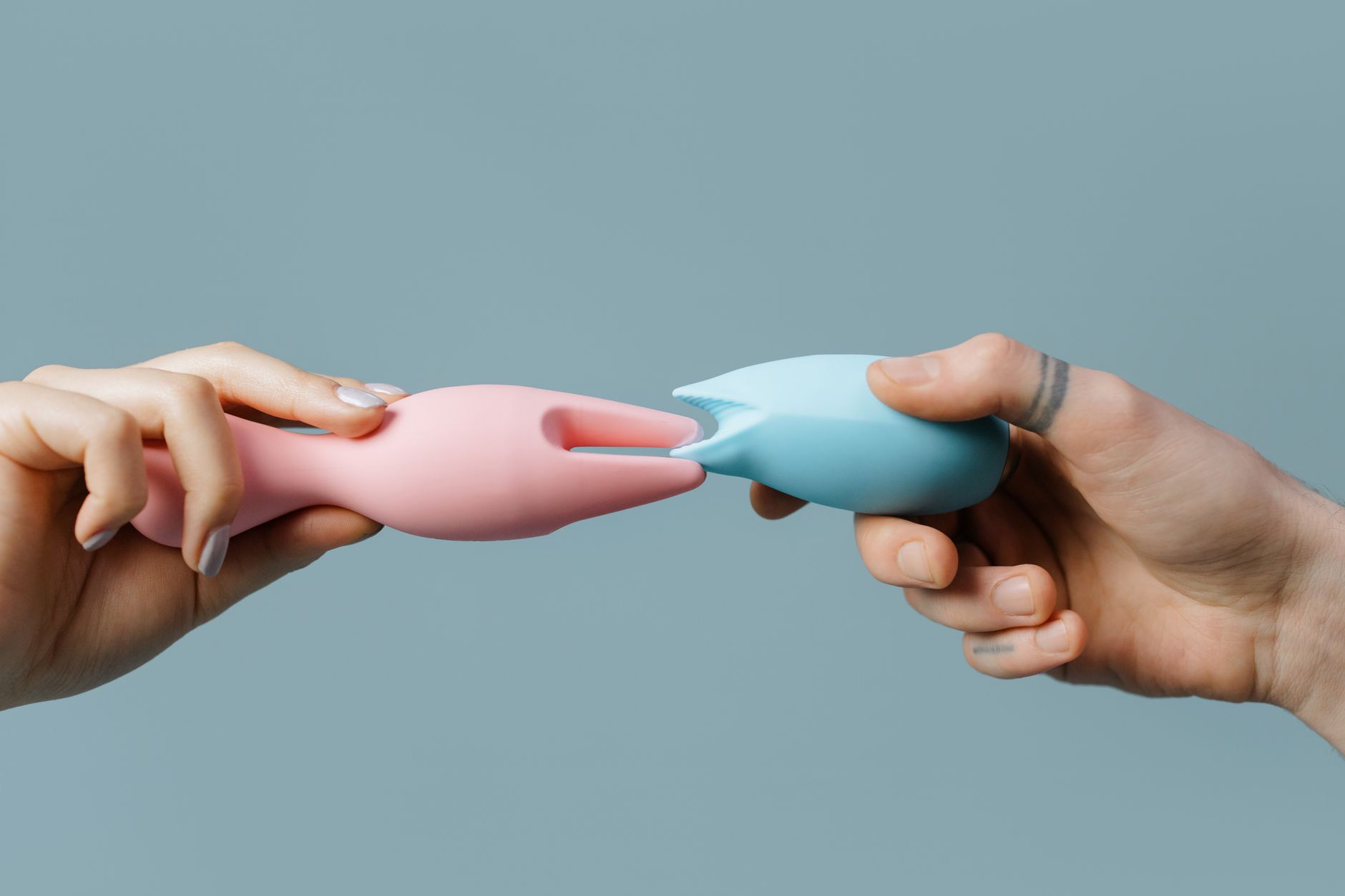
Photo by cottonbro studio on Pexels
Address the anxiety directly
If your partner is nervous, name what they're actually worried about. "Are you worried this means I'm not satisfied?" or "Do you feel like you're being replaced?" When you say it out loud, it becomes a thing you can actually talk about instead of a feeling that just sits there.
Here's what I tell couples: a clitoral vibrator does something your partner's body physically cannot do. It's not better or worse. It's different. You're not choosing it over them. You're choosing more sensation while they're with you. There's a real distinction, and it matters.
Many partners actually find that using a toy together removes pressure. When you have external stimulation handling the clitoral part of your pleasure, your partner can focus on touch, kissing, connection. Their job becomes about presence instead of performance. For a lot of couples, that's transformative.
Timing and positioning matter more than you'd think
Introducing the toy isn't about suddenly using it every time. The first time you use a lemon vibrator with your partner, keep everything else exactly the same. Same foreplay, same rhythm, same everything except now you're adding the toy at a point where you'd typically want more direct stimulation.
Most partnered sex happens with you on your back or in a position where your partner is in front. A lemon clitoral vibrator works beautifully in that setup. Your partner can be inside you or focused on you externally while you use the vibrator yourself. That agency matters. You're controlling the intensity, the pattern, the timing. Your partner is present without having to figure out the mechanics.
Some couples love the toy activated during penetration. Some prefer it during foreplay and then pause it. Some use it afterward when your partner has finished and you want to get there too. There's no wrong rhythm. You figure it out by trying.
The first time: what to actually expect
The first time you introduce a lemon clitoral vibrator, the experience is probably going to feel more mechanical than magical. You might be self-conscious. Your partner might be watching carefully instead of relaxing. That's completely normal, and it passes in about two minutes once sensation kicks in.
Start on a low pattern. The Lemon vibrator has multiple settings, and jumping to the highest one right away is like turning up the volume too fast. Begin where you'd naturally want stimulation, let yourself feel it, and adjust from there. Your partner can kiss your neck, touch your body, stay present. They're not managing the toy. You are.
What often happens: you'll orgasm faster or with less effort than usual. Your partner gets to experience that, watch that, feel that. It's genuinely hot for most couples. You're not performing. You're actually experiencing pleasure right in front of them. That distinction is the whole point.
Integrate it naturally, not as a band-aid
After the first time, the toy either becomes a regular part of your sex life or it doesn't. Both are fine. But if you're using it because your partner isn't getting you there, that's a different conversation and a different problem. How to use a lemon vibrator when you and your partner have different orgasm timings is about rhythm and matching bodies. This is about expanding what you both enjoy.
The couples I work with who use toys consistently report that the toy becomes almost invisible after a while. It's not a big deal. It's just part of the menu of what feels good. Some nights you use it, some nights you don't. Some nights your partner wants to hold it while you guide it. Some nights they want to focus on kissing while you manage the sensation yourself.
Variation is the point. Your body doesn't want the exact same thing every time. Lemon sexual toys give you the capacity to shift what's happening without requiring a whole different conversation.
When your partner wants to use it on you
This is a different dynamic and worth naming separately. Some partners love the idea of controlling the toy, directing the stimulation, managing your pleasure. If yours does, fantastic. The same rules apply: communication about intensity, checking in, letting sensation build. The difference is your partner has physical control, so the feedback loop is slightly different. They can watch your face and adjust the pattern based on what they see. That's actually really intimate for a lot of couples.
The only thing to watch: if your partner is using the toy on you, remind them that external stimulation is sensitive. Slow, intentional movements work better than frantic ones. Let the vibration do the work. They're guiding it, not mashing it. That distinction keeps it feeling good instead of numb or irritated.
The mental shift that actually changes everything
Here's what separates couples who integrate toys successfully from couples who try once and never again: the mental shift from "this is something we're adding because something's missing" to "this is something we're adding because we both want more pleasure."
If you frame it as a fix, your partner will hear it as criticism. If you frame it as an expansion, they'll experience it as invitation. The difference is real.
Toys like the Lemon vibrator aren't emergency solutions. They're not signs that something's broken. They're tools for couples who want to explore sensation together. That reframe takes about one conversation and one successful experience. After that, it becomes normal.
Common questions couples ask
Will using a toy make my partner less interested in sex? No. Usually the opposite. Couples who use toys report more frequent sex and higher satisfaction with their sex life overall.
Should we use the toy every time? No. Some nights, yes. Some nights, you won't want it. That's fine. The point is that you have the option.
What if my partner wants to use a toy on themselves during sex? That's separate from your toy experience, and it's their thing to own. You can support it, be curious, watch if they want you to. But it's not your responsibility to make that comfortable for them any more than they need to manage your comfort.
Is it weird if the toy works better than what we do together? Not weird. Different. Your body responds to different types of stimulation. Clitoral vibration is precise and direct. Partnered sex is varied and rhythmic. They're not competing. They're complementary.
How do we talk about this without it feeling like a big production? Same way you talk about anything. "I'd like to try using a vibrator together. Are you open to that?" You're not pitching a proposal. You're asking a question. Most partners will say yes or "let me think about it." Either one is workable.
The thing about trust and curiosity
Couples who navigate toys together tend to have better communication overall. Not because the toys are magic. Because using a toy requires you to actually talk about what feels good, what you want, what you're thinking. That's the real work. The toy just makes it concrete.
If you're nervous about introducing a lemon clitoral vibrator, that usually means the conversation you need to have isn't really about the toy. It's about whether you trust your partner with what you actually want. And if you don't, that's worth exploring separately. A toy won't fix relationship trust. But a relationship with real trust and communication makes introducing a toy ridiculously easy.
FAQ
How do I know if my partner will be comfortable with a vibrator?
You ask. Seriously. "I've been thinking about exploring toys. I'd love to do that with you. How does that feel?" You don't need to predict their reaction. Just invite the conversation and listen.
Can I use the lemon vibrator if my partner has ED or performance anxiety?
Actually, yes. If anything, it reduces pressure. Your partner isn't responsible for your clitoral orgasm anymore, which is something their body literally can't provide. They can focus on presence and connection. That often helps with anxiety, not hurts it.
What if my partner is jealous of the toy?
That's a signal that there's anxiety underneath about satisfaction or adequacy. You address it the same way you address any relationship anxiety: direct conversation about what they're actually worried about. "I notice you seem hesitant. Help me understand what you're thinking." Then listen without defending yourself.
Is it okay to use the vibrator during penetration?
Completely okay. Millions of couples do this. Your partner is inside you, and you're adding clitoral stimulation. For a lot of people, that's the only way they orgasm during penetration. It's not a workaround. It's just how your body works.
What if my partner wants to be involved but I want to solo-pleasure first?
That's fine. Use the toy by yourself first, figure out what patterns you like, what intensity works for you. Then when you bring it to partnered sex, you already know your preferences. You're not learning on each other.
Should I warn my partner about the sensation intensity?
Yes. A quick "This has multiple patterns and it gets pretty strong" sets expectations. Then they're not startled if you jump to a higher setting. Simple heads-up, nothing dramatic.
Introducing lemon clitoral vibrators into partnered sex isn't risky if you start with honesty. Your partner either wants this with you or they need time to warm up to it. Both are manageable. The couples I see who struggle are the ones who try to sneak it in or treat it like it's shameful. Own what you want. Invite your partner to explore it with you. That's the whole conversation.