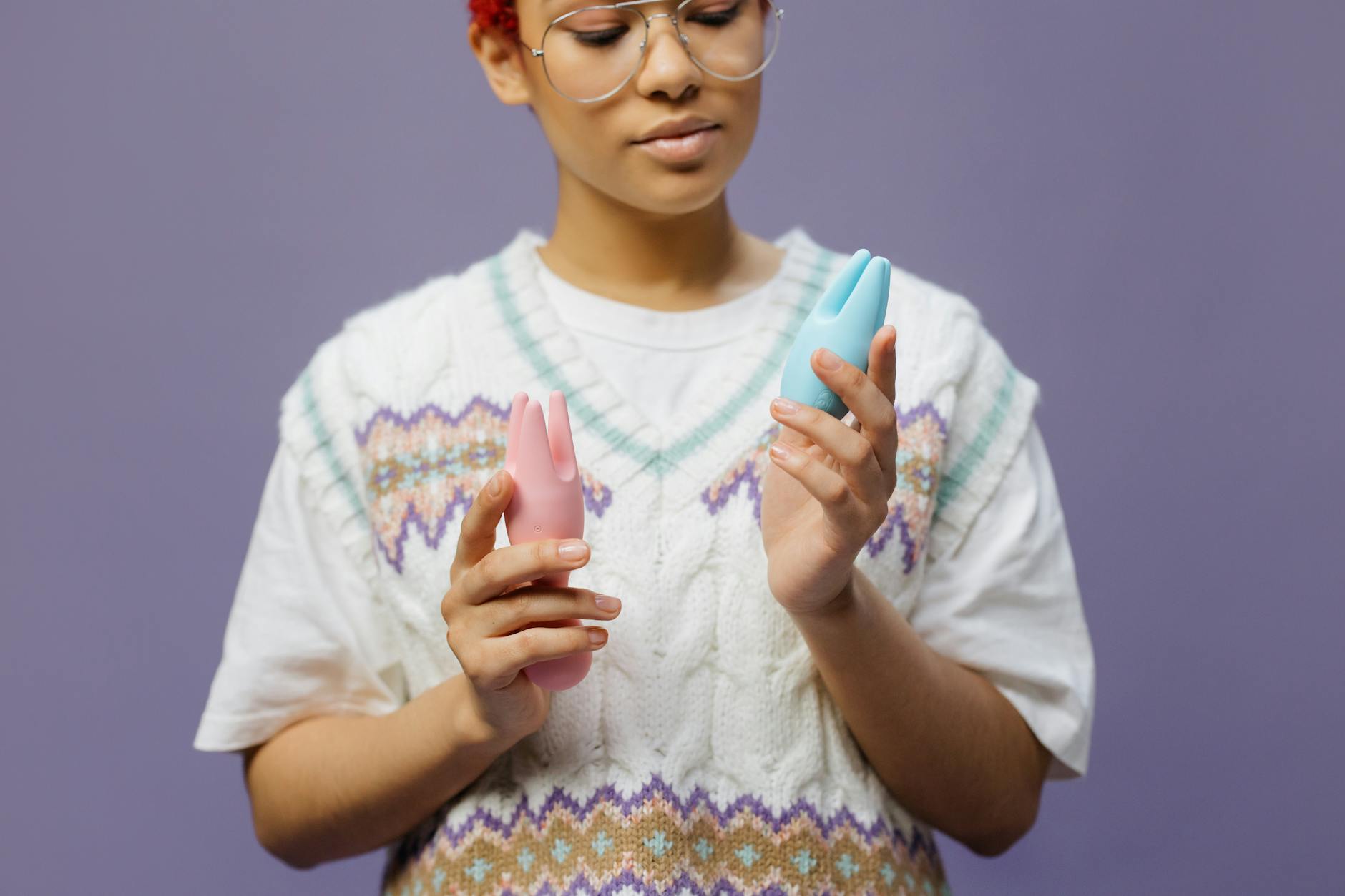
Let's talk about time
Most conversations about solo pleasure assume it's a sprint. Ten minutes between tasks. A quick release before sleep. But what happens when you actually give yourself permission to linger? When the goal isn't an orgasm as much as it's presence, sensation, and the freedom to feel your own body without watching the clock?
Everything changes. Your nervous system settles. Your ability to feel detail sharpens. Pleasure deepens because you're actually there for it, not performing it.
If you've been using a lemon clitoral vibrator (or any clitoral vibrator) only for quick sessions, you're missing something significant. Let's explore what extended, unhurried self-pleasure actually looks like.
Why rushing kills the experience
Your brain doesn't separate arousal from attention. When you're half-listening for your phone, glancing at the time, or mentally running through tomorrow's to-do list, your nervous system picks up on that distraction. Arousal requires parasympathetic activation. Stress activates the sympathetic. You can't be in both states at once.
Here's what happens in rushed sessions: you reach a baseline of arousal, spike quickly with vibration, and release. The experience is real, but it's one-dimensional. You're using the vibrator as a tool to get to an end point.
When you slow down, something different happens. You notice sensation you didn't know existed. You feel how different patterns affect your nervous system. You discover that some of the best pleasure is the buildup, not the arrival. That's not meditation. That's just actually paying attention.
Setting up for extended play
Four things make the difference between a rushed session and an extended one.
Block time like it matters. Not in a rigid way. Just make a conscious choice that this is the next hour (or two hours). Put your phone in another room or in Do Not Disturb mode with select contacts. Close the laptop. Turn off notifications. Your brain needs permission to believe this time is genuinely yours before it will settle into pleasure.
Create physical comfort. A lemon vibrator requires access to your clitoris, which means you need to get horizontal or find a position where you can stay relaxed for 20-60 minutes. Pile up pillows. Find the right angle so your arm doesn't cramp. Temperature matters too. Being slightly cool is better than overheated. Your body registers overheating as stress.
Treat lubrication like foreplay. Water-based lube isn't just for reducing friction. It's a tactile signal to your body that this is pleasure time. Take a minute. Feel the temperature. Apply it slowly. This isn't wasted time. This is the beginning.
Have your device ready and charged. A lemon clitoral vibrator on low battery is like trying to cook with a dull knife. You'll press harder, expect more, and end up frustrated. Full charge, test the buttons before you settle in, put it where you can reach it without breaking position.
The actual rhythm of extended pleasure
Think of unhurried self-pleasure in four phases, not as a linear progression but as a landscape you explore.
Phase one: settling (5-10 minutes). Lie down. Feel your breath. Feel where your body touches the surface underneath you. This is not about generating arousal. It's about arrival. You're arriving in your own body. Some people describe this as meditation. It's not. It's just slow enough that your nervous system recognizes this is safe time.
Phase two: exploration (10-20 minutes). Now touch yourself without the vibrator. Notice what feels good. Sometimes it's direct clitoral touch. Sometimes it's the inner labia. Sometimes it's the entire vulva treated as one sensitive landscape. A lemon vibrator amplifies what's already interesting to you, so figure out what that is first. Use your fingers to explore. This is you teaching yourself, not the vibrator doing the work.
Phase three: vibration introduction (10-30 minutes). When you introduce your lemon clitoral vibrator, start on the lowest setting. Most people jump to medium or high because they're used to rushing. Low settings teach you what this device actually does. You'll probably discover that the most interesting sensations aren't the most intense ones. A pattern that feels subtle at first might build into something profound over five minutes. Stay with one pattern for at least three to five minutes before switching. Your body needs time to register the signal.
Phase four: deepening or releasing (10-30 minutes). This is where extended pleasure bifurcates. You might find yourself gradually increasing intensity as arousal builds naturally. Or you might discover that you actually want to stay in a lower intensity space and just linger there, riding waves of sensation without chasing a peak. Both are legitimate. The point is you're not deciding ahead of time which one it "should" be. You're following what your body is actually asking for in that moment.
Managing intensity over time
One weird thing that happens in extended sessions: your clitoris becomes less sensitive to the same stimulus. Not desensitized. Your nervous system is just adapting. This is why people think they need stronger vibrations. They don't. They need variation.
If you're 20 minutes in and the pattern that felt amazing at minute three now feels boring, switch patterns. Or move the vibrator slightly. Or take a two-minute break and come back. Your clitoris needs novelty to keep registering sensation as novel. A lemon sucker (that's what some people call these air-pulse vibrators) is particularly good for this because the patterns create variation within consistency.
What actually happens when you stay present
Here's the thing that surprised most people I've worked with: longer sessions often result in different kinds of orgasms, or multiple smaller releases, or profound pleasure that never peaks into orgasm. All three are fine. All three are better than rushing because they're what your body actually wants in that moment, not what you expected.
You might discover that your solo pleasure is a form of emotional processing. Feelings come up. That's not a sign something's wrong. That's your nervous system regulating. You might discover that the most satisfying part is the 40-minute window of sustained pleasure, not the conclusion. You might discover that sometimes you want to use a lemon vibrator and sometimes you don't, and that's not failure. That's information.
The practice of giving yourself extended time for solo pleasure also teaches you something about your partner, if you have one. You learn what speeds work for you. You learn what patterns matter. You learn what you actually want versus what you thought you should want. That information is relationship gold.
The permission piece
If this feels self-indulgent, sit with that for a second. You shower regularly and don't feel guilty about it. You sleep eight hours and call it self-care. Solo pleasure is the same category of thing. Your body deserves attention. Your pleasure deserves time. This isn't about sex. This is about being in your own body without apology.
Take the pressure off the orgasm. Pressure kills pleasure faster than anything else. If you reach a point where you feel like "I've been here 45 minutes, I should probably come," that's pressure. Release it. Maybe you come. Maybe you don't. Maybe you come three times. The job of extended solo time isn't to achieve something. It's to feel something. Those are completely different projects.
When to reach out for support
If extended self-pleasure sessions feel impossible because of trauma, anxiety, or intrusive thoughts, that's real and worth addressing with a therapist who specializes in sexual health. How to Use a Lemon Vibrator When Anxiety and Intrusive Thoughts Block Pleasure covers some practical grounding techniques specifically for this situation.
If numbness or low sensation makes extended sessions feel pointless, that's also addressable. How to Use a Lemon Vibrator When Clitoral Numbness Blocks Pleasure and Orgasm offers strategies for rebuilding sensitivity gradually.
If you've never experimented with solo pleasure at all, that's also fine. Start shorter. Fifteen minutes is enough. As your nervous system learns that this time is safe, you'll naturally expand into longer sessions when you want to.
FAQ
How long should a solo pleasure session actually be?
There's no "should." Fifteen minutes is a full session. Ninety minutes is a full session. What matters is that you're present and not watching the clock. If you find yourself thinking "how much longer?" that's a sign you're either not in the mood or you need to adjust something about the setup (too warm, not comfortable, distracted by noises). Listen to that. Forcing an extended session defeats the purpose.
What if I get bored during longer sessions?
Boredom is information. It usually means one of three things: you actually don't want to continue (totally valid), your body needs novelty so switch patterns or positioning, or you're in your head instead of your body (take a 2-3 minute break, breathe, come back). A lemon clitoral vibrator has multiple patterns specifically for this reason. Explore them.
Can I use a lemon vibrator for extended play every time, or is it sometimes too much?
Your clitoris will tell you. Some people find that daily extended sessions are wonderful. Others prefer two to three times a week. Some people want extended sessions occasionally and quick releases other times. None of these patterns are wrong. Your body isn't a machine with a set operating schedule. It's an ecosystem. Let it regulate itself.
What if I fall asleep during a session?
Your body needed sleep more than pleasure. That's not failure. That's wisdom. Put the vibrator down safely, take a nap, and come back to it later if you want. Your nervous system prioritizes based on what you actually need, not what you planned.
Is it normal to feel emotional after extended solo sessions?
Completely normal. Pleasure, presence, and touch activate the parasympathetic nervous system and release oxytocin. That's a regulatory state, and regulation sometimes brings feelings to the surface. You might feel vulnerable, emotional, or deeply peaceful. All of it is fine. Some people like to journal afterward. Some people just lie there. Some people get up and make tea. There's no protocol.
Should I always aim for an orgasm in an extended session?
No. Orgasm is one possible outcome, not the goal. The goal is sensation and presence. Sometimes that leads to orgasm. Sometimes it leads to deep relaxation. Sometimes it leads to a gentle sense of connection with your own body. All of these are the point. If you're always reaching for orgasm, you're still rushing internally, even if you're taking a long time to get there.
Give yourself permission to explore solo pleasure without a destination. A lemon vibrator is a tool for sensation, not a means to an end. The best extended sessions are the ones where you forget you were trying to get somewhere and just ended up exactly where you needed to be.
If you're looking for more guidance on building your solo practice, reach out at /contact. We're here to support your pleasure journey without judgment.