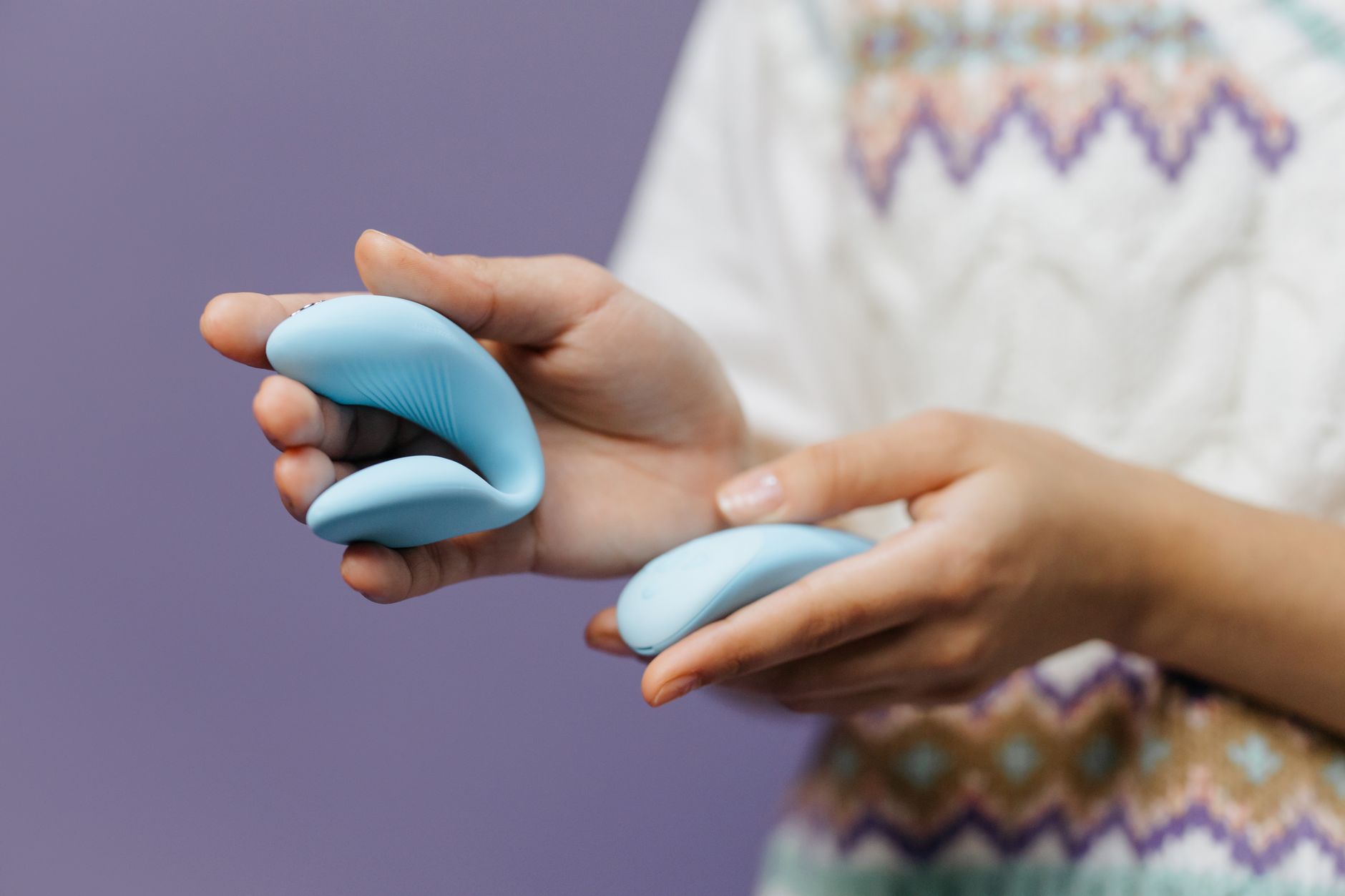
The paradox nobody talks about
Early relationships are supposed to be uninhibited. Supposedly, new love means fewer walls. But then you're in bed with someone who matters, and suddenly you want to hide the Lemon vibrator in the back of a drawer like it's contraband. Which is the opposite of uninhibited.
Here's what's actually happening: new relationships aren't less vulnerable than long-term ones. They're just vulnerable in a different way. With an established partner, you already know they're staying. With someone new, every conversation feels like it could tilt the entire thing. So the thought of saying "I use a vibrator" or "I like clitoral stimulation more than penetration" gets tangled up with the fear that they'll judge you, want different things, or leave.
That fear is real. It's also not actually about the toy.
What shyness about toys really is
Let me be direct: shyness about vibrators isn't usually about the vibrator. It's about three things colliding at once.
First, early-relationship risk. You don't know yet if this person is the kind who laughs with you or laughs at you. That uncertainty is legitimate, and it makes vulnerability feel dangerous.
Second, socialization. Most of us grew up hearing, explicitly or implicitly, that good women aren't too interested in their own pleasure. Good women are responsive, not initiating. Good women don't need toys. That message is nonsense, but it lives in your nervous system anyway.
Third, the comparison trap. You might be thinking: if I bring a lemon clitoral vibrator into this, does that mean I'm not satisfied with them? Does it mean they're not good enough? Will they think I'm broken because I need stimulation they can't provide? These are all backwards logic, but they feel real when you're trying not to mess up something new.
None of these fears have anything to do with how good your toy is.
Why introducing a vibrator is actually a test of fit
Here's the reframe: bringing up pleasure tools early isn't a risk. It's information. If you mention you use a lemon vibrator and your new partner reacts with shame, judgment, or anger, you've learned something crucial about compatibility. Not about your worth. About fit.
A partner worth keeping will either:
- Be curious and interested
- Be neutral about it ("cool, whatever you need")
- Want to participate
- Respect your autonomy
A partner who mocks you, withdraws, or tries to convince you that you shouldn't need one is showing you something about themselves. Not something about you.
I tell couples in therapy: pleasure communication isn't a trap. It's a foundation. The ability to say "here's what I like" and have that met with curiosity or respect is the same muscle that lets you say "I'm hurt" or "I'm scared" later on. If you can't build that early, the relationship isn't as safe as you think it is.
The conversation itself, if you're dreading it
Okay, so theoretically you believe that. But you still don't want to have the conversation. Fair.
Start by divorcing the vibrator from the relationship. You're not introducing it as "I need this because you're not enough." You're introducing it because you've always used one, or you want to explore it, or you've realized you prefer clitoral stimulation, or you just find it pleasurable. None of which is about them.
Timing matters. Don't do this mid-sex. Don't do it when you're already vulnerable and half-naked and worried about rejection. Do it clothed, calm, maybe over a drink or a walk.
Sample scripts (adjust for your actual voice):
- "I've been thinking about this, and I want to be honest with you. I use a vibrator when I'm alone, and I've really liked it. I'd be into exploring that with you sometime, if you're interested. If not, that's okay."
- "I'm really into the idea of clitoral stimulation, and I've had good experiences with toys. I'd love to try that together. Would you be open to that?"
- "I want to get more comfortable being myself around you, which means talking about pleasure stuff. I have a lemon vibrator I use. Would you ever want to incorporate that?"
Notice what's in all of these: you're stating a fact about yourself, not asking permission. You're also making space for a no. And you're not over-explaining or apologizing for having a body that works a certain way.
What to actually do in the moment
If the conversation goes well and you're moving toward using the toy together, here's the practical part.
First time, keep it simple. You're not running a workshop. You're not narrating. You're just letting them see what you like. Bring it out when you're already intimate, use it the way you normally would, and let them watch. Most people's fear dissolves the moment they see someone they care about using a toy and actually enjoying it. It stops being abstract and weird. It becomes "oh, that's just part of how my partner experiences pleasure."
Let them participate if they want. Some partners will want to hold it, apply it, control the pattern. Some will be content to just watch. Both are fine. If they want to help, great. If they don't, that's not rejection. They might just need time to get comfortable.
Temperature-check after. Not like "was that good?" but more casual: "How did that feel for you?" or "Want to do that again next time?" This keeps it part of the normal conversation instead of a Big Serious Thing.
The specific advantage of a lemon vibrator with new partners
Lemon clitoral vibrators are actually ideal for this situation, specifically because they're unambiguous about their purpose. There's no "well, what is this for exactly?" question. Everyone knows it's for clitoral pleasure. The design doesn't pretend to be anything else.
That directness can actually ease the conversation. You're not fumbling around with a toy that could theoretically be for anything. You're saying: "This is for what it's designed for. Here's what I like. Want to be part of that?"
The intensity range also helps with early-relationship sex. If you're still figuring out each other's bodies and rhythms, starting with a lower pattern on the lemon and working up means you can adjust in real time. You're collaborating instead of performing.
If they react badly, that's information
I want to be clear about this because it matters: if your new partner responds to "I use a vibrator" with shame, frustration, or an ultimatum, that's not a reason to hide your pleasure. That's a reason to reconsider the relationship.
I don't say that lightly. But I say it because I've sat across from hundreds of people in long-term relationships who spent years hiding their own sexuality because they learned early on that it wasn't safe to bring it up. By the time they got to couples therapy, the resentment had calcified.
Early honesty costs short-term awkwardness. Long-term suppression costs much more.
If the rejection happens, you haven't failed. The relationship has just shown you something about whether it's actually safe. That's painful, but it's useful information.
Building a shared language for pleasure
Once you've brought up toys and the conversation didn't end the relationship, you've actually opened something bigger: a shared language for pleasure. This is worth the discomfort.
Over time, this language lets you say other things. "I like when you go slower." "That pattern feels better than the other one." "Can we try this position?" These sound like small things, but they're the difference between sex where you're managing a partner's ego and sex where you're actually connected.
Lemon vibrators, in this context, aren't about the toy. They're about permission. Permission to want what you want. Permission to ask for it. Permission to be someone who experiences pleasure, not just someone who receives it.
That's what makes bringing it up worth the initial awkwardness.
People also ask
How do I bring up using a vibrator without making my new partner feel inadequate?
Frame it as "here's something I like" rather than "you're not enough." These are actually very different conversations. One is about you. The other is about them. Most partners feel inadequate when they think the toy is a replacement for them, not a complement. Be explicit: "I want to experience this, and I also want to experience it with you." The two aren't mutually exclusive.
What if my partner thinks using toys means I'm not attracted to them?
This is a common fear they might have, so address it directly if they seem worried. You could say something like: "I'm attracted to you. Clitoral stimulation is just how my body works best. These two things don't contradict each other." Many partners confuse "needs different stimulation" with "not attracted." They're not the same, and it's worth spelling that out.
Is it better to use a lemon vibrator alone first, or introduce it together from the start?
There's no single right answer, but I typically recommend: if you've used toys before, be honest about that early. If you haven't, trying one alone first and knowing what you like actually makes the conversation with a partner easier. You're not both figuring it out from zero. You can say "I tried this, and here's what I liked," which is less vulnerable than "I don't know, let's figure it out together." Both approaches work, but knowing your own body first tends to reduce the performance anxiety.
What if they want to use it in a way that doesn't feel good?
This is a teaching opportunity, not a rejection. "That feels intense" or "can you try a lighter touch?" are the same communications you'd have about anything else. If they're offended by direct feedback about what feels good, that's the actual problem, not the toy.
Should I hide my toys when they're at my place?
No. You're an adult with a body. Your sexuality isn't shameful. If someone is going to judge you for having a vibrator, that judgment exists whether it's visible or not. You're just spending energy hiding. Being open about it (not aggressively, just matter-of-fact) signals that you're comfortable with yourself, which is actually attractive.
How often should we use the vibrator once they're comfortable with it?
As often as feels good. There's no "recommended dosage" for pleasure. Some weeks you might use it every time. Some weeks not at all. What matters is that it's integrated into your sex life as a normal option, not a special occasion thing or something you have to justify. Once the initial awkwardness passes, it just becomes part of your toolkit.
The thing underneath all of this
Using a lemon vibrator with a new partner isn't really about the toy. It's about deciding that your pleasure matters enough to risk a conversation. It's about believing that the right person will meet that honesty with curiosity, not judgment. And it's about building a relationship where you can ask for what you actually want instead of performing what you think they want.
That's the harder part than the vibrator itself.
If you're nervous about bringing this up, that's normal. But nervous doesn't mean you shouldn't do it. The couples who navigate pleasure conversation early are the ones who stay connected through the harder stuff later. Your willingness to be honest now is actually you investing in the relationship, even though it feels risky.
If you need to talk through this more, reach out anytime. That's what I'm here for.