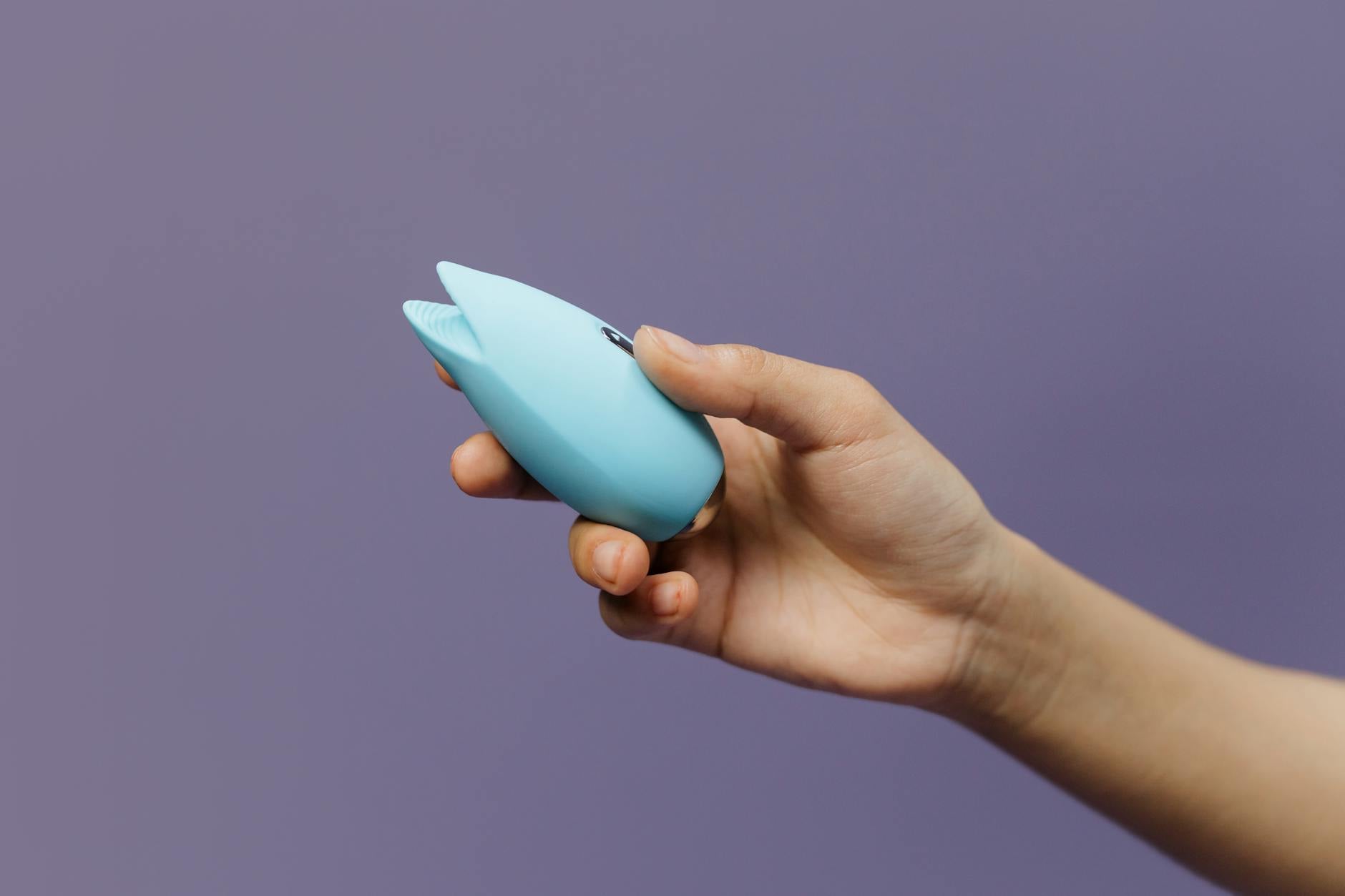
When your body feels like it belongs to someone else
Let's be real: disconnection from your body is not laziness, and it's not a lack of desire. It's a protective mechanism your nervous system deployed because something hurt, because you were overwhelmed, or because you spent so long running on empty that your body just... checked out.
When you feel untethered from physical sensation, pleasure becomes impossible. Not because your clitoris stopped working, but because the link between your nervous system and your genitals got severed. Touching yourself feels like touching a stranger. A lemon vibrator can rewire that connection, but only if you approach it differently than someone without this particular friction.
Why numbness happens (and why it's not permanent)
Dissociation, chronic stress, depression, and trauma all do the same thing neurologically: they dampen the signals between your brain and your body. Your nervous system is trying to protect you by turning down the volume on sensation. It's a feature, not a bug. But it means pleasure gets muted along with pain.
The good news is your nervous system can recalibrate. Sensation isn't lost. It's suppressed. And suppressed sensation can be reawakened with patience and the right tools. A lemon vibrator works here because it provides consistent, predictable stimulation that doesn't demand anything of you emotionally. You're not performing. You're just receiving signal and practicing noticing it.
Starting with the lightest touch
Forget everything you've heard about maximizing sensation. You're not trying to chase an orgasm. You're trying to rebuild awareness. That means starting so gentle that it almost feels like nothing is happening.
Use the lowest setting on your lemon clitoral vibrator. Pattern 1, if yours has patterns. Hold it against your inner thigh for 30 seconds. Notice the vibration. Don't try to feel pleasure. Just notice the fact of the sensation. Is it warm? Cold? Sharp? Dull? Buzzy? You're training your brain to register input.
Then move it to your outer labia. Again, lowest setting. Spend 2-3 minutes there. Your job is to notice, not to respond. This is meditation with a vibrator.
Building tolerance slowly
After a few days of this, you can move to the clitoris itself for 10-15 seconds at a time. Still lowest setting. Still just noticing. If it feels like nothing, that's normal. If it feels uncomfortable or too intense, that's also normal. Pull back. Stick with your thigh and outer labia for another week.
The goal is to make your nervous system feel safe enough to stop dampening signal. That takes consistency and gentleness. You're literally rewiring the relationship between stimulation and sensation.
When you're ready to increase intensity, move up one setting and spend another week there before advancing. This is a protocol, not a progression. Slow wins this race.
The role of anticipation (and why you need to build it)
When you're disconnected, anticipation is often gone too. You don't look forward to pleasure because you don't believe it's coming. This kills libido before it starts.
One concrete thing I recommend: set a time. Pick one evening, or one morning, and commit to it. Tell yourself a week in advance. The anticipation itself, even if muted, is neurological currency. You're teaching your brain that sensation is coming. That it's worth priming for.
When you sit down to use your lemon vibrator, spend 5 minutes doing absolutely nothing with it. Lie down. Feel the texture of your sheets. Notice your breathing. Let your body remember that it exists. Then pick up the vibrator.
When self-touch still feels disconnecting
Some people find that using their own hands to position the lemon vibrator feels too close to the dissociation itself. If that's you, that's not a failure. That's important information. You might need to use a hands-free approach. Lie on your back with a pillow under your hips and position the vibrator against your body without holding it. You're still engaged, but the layer of "my hands doing this to my body" is removed.
Other people benefit from external focus. Play music you love. Watch a ceiling fan spin. Anything that gives your brain something to track while your body receives sensation. This is not distraction. It's a workaround for a nervous system that doesn't trust embodiment yet.
Partnered use when you're struggling
If you have a partner, they can help without this becoming a performance or a problem. The conversation starts outside the bedroom. "I'm feeling disconnected from my body. I want to rebuild sensation. I'd like you to know what that means I need from you."
What you probably need is companionship without expectation. Your partner can sit with you. They can use the lemon vibrator on you if that feels less like "your body doing this to you" and more like "I'm being cared for." Or they can simply be nearby while you do this work solo. The knowing you're not alone matters more than you'd think.
The one thing to avoid: partnered sex until you've rebuilt enough internal sensation that it doesn't feel hollow. Pushing toward partnered intimacy before your nervous system has recalibrated will actually deepen the disconnection. You need solo success first.
When to bring in other support
A lemon vibrator is a tool, not a treatment. If dissociation is severe, if it's paired with intrusive thoughts or panic, or if you've experienced trauma, working with a therapist who specializes in somatic experiencing or trauma-informed therapy is non-negotiable.
I often recommend somatic practitioners alongside this work because they teach you how to inhabit your body in real time. A therapist can help you understand why the disconnection happened. A somatic practitioner helps you practice living in your skin again. A lemon vibrator is what you do between sessions.
These things compound. Each one alone helps. Together, they rebuild the internal map of your body.
The timeline is not linear
Some people rebuild sensation in weeks. Others take months. You might have a week where everything clicks, then a week where you're numb again. That's not backsliding. That's healing. Your nervous system is learning to trust sensation again, and that learning is not a straight line.
On the hard weeks, go back to basics. Lowest setting. Inner thigh. Noticing without pushing. You're not trying to achieve anything. You're just practicing the fact of being in your body.
Between you and me, this is often when people realize they needed to slow down their entire life, not just their pleasure. Disconnection is usually a symptom of burnout or unprocessed emotion. Rebuilding it requires looking at what caused it. A lemon vibrator can start that conversation. But the conversation extends everywhere.
FAQ
What if I've been numb for years? Will sensation come back?
Yes, absolutely. Sensation doesn't disappear permanently. It gets suppressed. Even if you've been disconnected for a long time, your nervous system retains the capacity to feel. It just needs consistent, patient practice and the right conditions to feel safe reopening. The people I work with who've been dissociated the longest are often the ones who experience the most profound shifts once they start this work.
Can I use my lemon vibrator if I'm on antidepressants that reduce sensation?
Yes. Antidepressants that affect sensation require a different approach with a lemon clitoral vibrator, but not an impossible one. The key is patience and often a higher intensity setting than someone off medication would use. Talk with your prescriber about what you're experiencing. Sometimes timing the use right after you take your medication helps. Sometimes adjusting your dose or adding an additional medication helps. You're not stuck with medication-induced numbness, even if it feels that way.
Is this the same as using a lemon vibrator for trauma?
Related, but different. Trauma creates dissociation in a specific way. Burnout, grief, depression, and prolonged stress create their own versions. The practice is similar (slow, consistent, patient), but trauma-specific work needs a trained guide. If your disconnection is trauma-related, please work with someone qualified before you work with a lemon vibrator solo.
How long before I notice a difference?
The very first session, you'll likely notice something. Not pleasure necessarily. Just... awareness that the vibration exists and your body is receiving it. That's the shift. Within a week or two of consistent practice, you'll notice that sensation lingers a bit longer. Within a month, most people report being able to locate pleasure somewhere on the spectrum. Full reconnection takes longer, but the fact of it comes fast.
Should I avoid my lemon vibrator while I'm feeling disconnected, or use it more often?
Use it consistently, but gently. Not every day if that feels like pressure. But regularly enough that your nervous system knows this is part of your routine now. Three times a week is often the sweet spot. You're practicing embodiment. Like any practice, consistency matters more than intensity.
Can my partner touch me with the lemon vibrator if I can't touch myself?
Absolutely. Some people find that receiving sensation is safer than creating it. If a partner using the lemon vibrator on you feels less triggering than self-touch, that's valid. The conversation is just "I need you to keep this slow, low intensity, and no expectations attached." And they need to mean it.