Here's the thing about anger and arousal
They live in completely different rooms of the nervous system. When you're holding resentment toward a partner, your body knows it before your brain catches up. Your nervous system flags the relationship as unsafe or tense, and arousal just shuts down. It's not a choice you're making. It's a protective mechanism that's working exactly as designed.
The tricky part is that this kind of blockage often gets confused with low desire, hormone shifts, or even the relationship itself being unsalvageable. But here's what I've seen over decades of working with couples: the blockage is usually situational, not permanent. And reclaiming solo pleasure while the relationship issue sits unresolved is not avoidance. It's actually a crucial intermediate step.
Why resentment kills pleasure specifically
When you're in conflict with someone you're intimate with, your body goes into a subtle state of hypervigilance. You're tracking their mood, their breathing, their judgment. That background scanning uses up the bandwidth your nervous system needs to relax into arousal. You can't simultaneously monitor threat and surrender into sensation. Your brain won't let you.
What makes this worse is that many people interpret the dead arousal as proof the relationship is over, or that they've broken something in themselves. Neither is usually true. The arousal isn't dead. It's just redirected toward vigilance.
The second complication is guilt. If you resent your partner but still love them, touching yourself solo can feel like a betrayal or an escape. That layer of shame on top of the blocked arousal makes the whole thing feel stuck and heavy.
How solo pleasure with a lemon vibrator changes the equation
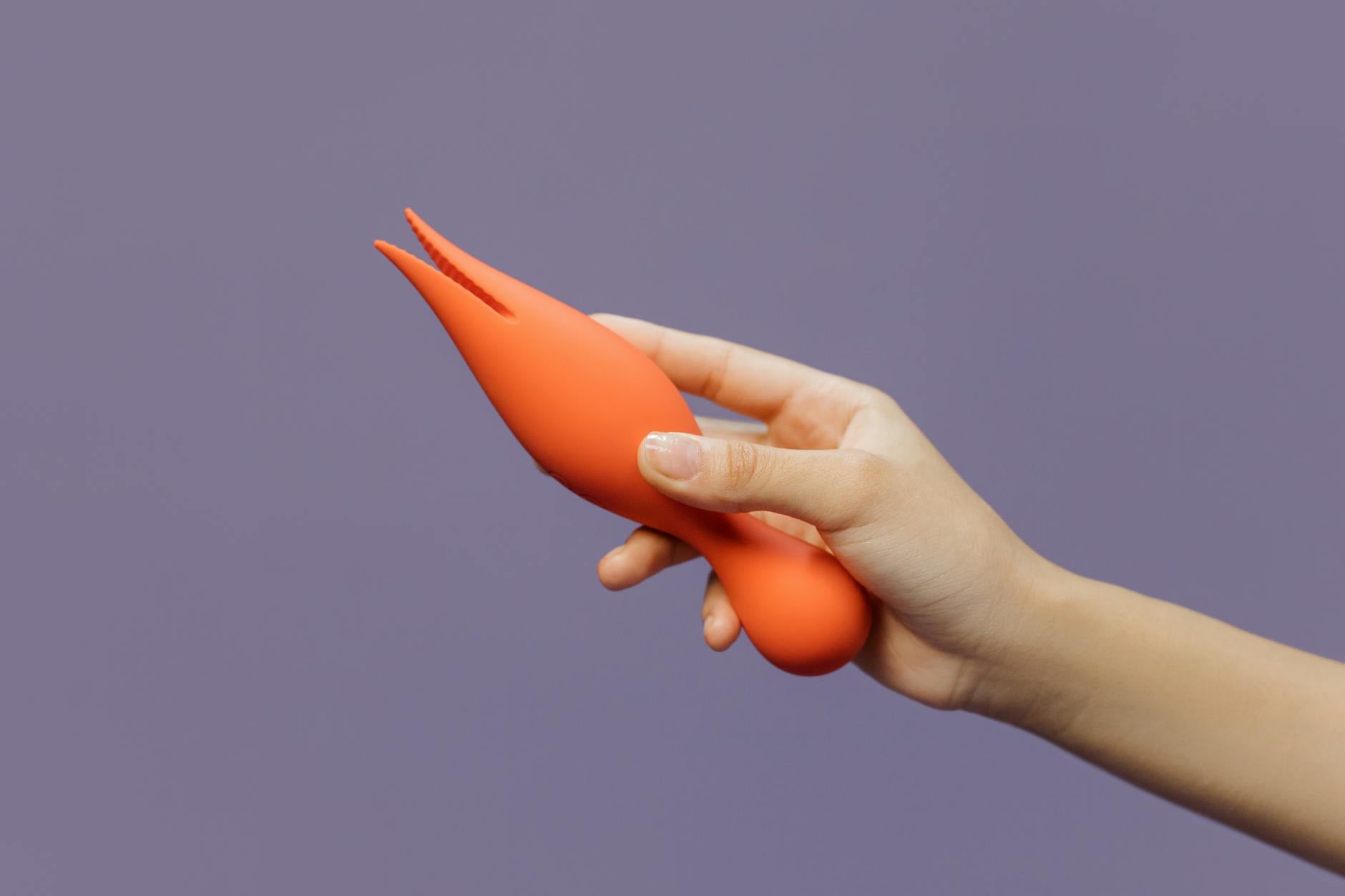
Using a lemon clitoral vibrator alone, when there's tension in the relationship, serves three specific functions.
First, it separates sensation from relational safety. A vibrator doesn't require you to trust your partner. It doesn't judge. It doesn't need anything from you emotionally. That removes the hypervigilance component. Your nervous system can actually relax because there's no relationship threat in the room.
Second, it rewires the arousal pathway. When pleasure has been blocked by resentment for weeks or months, your body starts to believe that arousal requires resolution first. But it doesn't. Your clitoris doesn't care about the argument from last Tuesday. Solo touch proves to your nervous system that pleasure is still available to you, independent of the relationship status.
Third, and maybe most importantly, reclaiming your own orgasms gives you something to negotiate from. When you can access your own pleasure, the dynamic with your partner shifts. You're no longer waiting for them to fix the problem so you can feel okay again. You're reclaiming agency in your own body.
The actual practice when resentment is live
Timing matters here. Don't use the vibrator right after a fight or when you're actively angry. Your nervous system needs to come down a bit first. I usually recommend waiting until at least the next day, or whenever you notice the acute tension has dulled into a low background hum.
Set aside 20 to 30 minutes when you know you won't be interrupted. Privacy is non-negotiable because you need your body to believe it's genuinely safe. Resentment plus the risk of being discovered mid-pleasure is a combination that keeps your nervous system locked up.
Start with your body, not the vibrator. Spend 10 minutes just touching yourself. No pressure to feel anything. The point is reconnecting with sensation that isn't routed through the relationship. Notice where you hold tension. Your shoulders, your jaw, your belly. Breathe into those places.
When you reach for the lemon vibrator, start at a lower intensity than you normally would. Resentment often comes with a subtle dissociation. Your body is there but your mind is somewhere else, replaying the conflict or imagining conversations. A gentler vibration gives you something to track without overwhelming your attention. You need sensations strong enough to pull your focus but not so strong they trigger that protective numbness.
Take your time. If pleasure doesn't build the way it normally does, that's not failure. You're literally retraining neural pathways. Some sessions will feel flat. That's information, not a problem.
The goal isn't an epic orgasm. The goal is to prove to your body that pleasure exists separately from the relationship status.
What happens after you've reconnected solo
Once you've spent a few sessions reclaiming your own arousal, something shifts. The relationship resentment is still there. The unresolved argument hasn't magically fixed itself. But you're no longer asking your partner to be the sole source of your pleasure. That changes the dynamic in subtle ways.
You have more patience because you're not completely touched-starved. You have more clarity because you're not filtering everything through frustration and blocked desire. And you have something to build on if you do decide to work toward reconnection with your partner.
That reconnection conversation becomes different too. Instead of "I haven't been able to feel anything because of what happened," you can say, "I've been rebuilding my own sense of pleasure. I want to figure out if we can do that together." That's a much more generative starting point.
When to bring this conversation to your partner
Honestly though, you don't have to tell them immediately. This is your reclamation process. If you have a partner who's supportive of solo pleasure and vibrators, great. Share if you want to. If you're in a dynamic where your solo pleasure would become another thing to fight about, you don't owe them a detailed account of your alone time.
What does matter is eventually addressing the resentment itself. Solo pleasure with a lemon vibrator is not a substitute for difficult conversations or couples work. It's an intermediate step that gives you the nervous system space and pleasure access to actually show up for those harder conversations.
The thing about timing and readiness
Some people use solo vibrator sessions to delay dealing with relationship conflict. I've seen that too. If you're using the vibrator specifically to avoid the conversation, that's worth noticing. Six months of solo pleasure while the resentment grows isn't healing. It's just postponement.
The distinction is this: if you're using solo pleasure to stabilize yourself so you can show up more fully in your relationship, that's useful. If you're using it to convince yourself the relationship problems don't exist, that's avoidance. You'll know the difference in your body. One feels like genuine relief. The other feels like escape.
FAQ
Can I use a lemon vibrator to reconnect with my partner if resentment is blocking us?
Indirectly, yes. The pathway isn't vibrator-based reconnection. It's that reclaiming your own pleasure takes the pressure off your partner to be your sole source of arousal. When that pressure lifts, couples often find it easier to be intimate again because intimacy isn't carrying all the weight of fixing the resentment. The lemon clitoral vibrator is the tool that creates that space, but the real work is still the conversation about what caused the resentment.
What if my partner finds the vibrator and thinks I'm choosing it over them?
That's unfortunately common, and it's rooted in the misconception that a vibrator is competition. A useful reframe: "I'm using this to keep myself well while we work through what's between us. It's not about replacing you. It's about not losing myself while we figure this out." If your partner responds to that with more anger or control, that's different information about the relationship and might be worth exploring with a therapist. Controlling your access to your own body is a pattern worth noticing.
How long before pleasure comes back if resentment has been blocking it?
That varies wildly. Some people feel a shift within two or three solo sessions. Others need a few weeks of consistent solo touch before arousal starts flowing again. It depends on how deep the resentment runs and how much your nervous system has been in protective mode. If you're not noticing any shift after six weeks of regular solo pleasure, that might be a sign that the resentment needs more direct attention, possibly with professional help.
Is it okay to have an orgasm alone while still angry at my partner?
Completely okay. In fact, it's more than okay. Your orgasm belongs to you. It doesn't have to be earned through relationship harmony or conditional on your partner's feelings. Your pleasure is not a reward or punishment. It's a basic thing your body can do. The resentment is real, and so is your right to feel good in your own body.
Should I wait to address resentment before using a lemon vibrator?
No. Use the vibrator as part of addressing resentment, not as a thing to do after it's resolved. Reclaiming your pleasure and working on the relationship conflict aren't mutually exclusive. In fact, addressing both simultaneously often works better because you're not entering those hard conversations from a place of complete arousal deprivation.
What if the lemon vibrator doesn't help and pleasure stays blocked?
Then the blockage might be deeper than the current resentment. Chronic pleasure difficulty sometimes points to older relational patterns, past trauma, or health stuff worth exploring with a therapist or doctor. A vibrator is a tool for pleasure, not a therapeutic intervention for complex blocks. If nothing shifts after consistent solo practice, professional support becomes valuable.
The bottom line
Resent ment dims desire, yes. But it doesn't erase your capacity for pleasure. A lemon clitoral vibrator gives you a way to access that capacity while the relational work happens separately. You can reclaim your body and work on your relationship at the same time. Those two processes actually support each other. Your pleasure matters, separate from any conflict. Your vibrator knows that. Your nervous system is waiting to remember it too.