
The mismatch conversation nobody wants to have
You want sex twice a week. Your partner wants it twice a month. Or maybe it's the opposite. Either way, you're left feeling rejected, they're feeling pressured, and sex has become a source of conflict instead of connection. This is one of the most common relationship friction points, and it's almost never actually about sex.
Here's what I see over and over in my practice: when libido mismatches emerge, couples often assume it means incompatibility. It doesn't. What it usually means is that one person's pleasure pathway is different from the other's, or that one person's stress load, hormones, or relationship needs have shifted. The good news is that a lemon vibrator can become a tool for meeting in the middle, not because it forces anyone into wanting more, but because it separates the conversation about your pleasure from the conversation about your connection.
Why libido mismatches happen (and why they're not your fault)
Libido isn't a fixed setting. It responds to stress, hormones, sleep, emotional safety, work pressure, body image, and a dozen other invisible variables. When a mismatch develops, it's tempting to interpret your partner's lower desire as rejection. It usually isn't. It's usually that their nervous system needs something different than yours does right now.
The person with lower desire often feels guilty. The person with higher desire often feels unlovable. Both feel like they're failing at something that should be simple. It's not simple. And it's not a failure.
What matters next is clarity. Are you mismatched because one of you has experienced a real change in desire (hormonal shift, medication side effect, stress spike)? Or are you mismatched because you've never actually negotiated how you both want to experience pleasure? The answer shapes the whole strategy.

Photo by Olga Lioncat on Pexels
The three conversations you actually need
Most couples try to solve a libido mismatch with one conversation. That's why it stays broken.
Conversation One: The Desire Audit. This is you, alone or with your partner, getting honest about what's actually changed. Did desire drop after a medication change? After having kids? After a fight that never fully resolved? After your partner started working longer hours? After you started feeling less attractive? The cause matters because it shapes the solution. If it's hormonal, you might need a different approach than if it's emotional. Start here before you try to fix anything.
Conversation Two: The Pleasure Conversation. This is separate from "let's have more sex." This is "what would pleasure feel like to me right now, and what would it feel like to you?" They might be completely different. Maybe you need regular touch and penetration to feel connected. Maybe your partner needs more foreplay, or less pressure, or more emotional intimacy before physical intimacy feels safe. Maybe they need you to take the initiating weight off them. A lemon vibrator enters here, not as a solution to more sex, but as a way for the higher-desire partner to meet their own needs without making the lower-desire partner feel obligated.
Conversation Three: The Boundary Conversation. This is where you get practical. "I need clitoral stimulation to orgasm, and that works best when I use my vibrator. I might want that once a week solo, or sometimes with you here. I want you to know this isn't a reflection on you or what you're not giving me. It's just how my body works." Stating your needs clearly removes the subtext of blame. Your partner can then decide how they want to participate, if at all, without feeling like they've failed.
How a lemon vibrator fits into a mismatched relationship
A clitoral vibrator becomes a communication tool, not a Band-Aid on the problem.
For the higher-desire partner, using a lemon vibrator solo means you're not storing up resentment or pressure. You're taking care of yourself. That's radically different from pursuing your partner for sex when they're not interested. One builds connection (you're autonomous, you're okay), the other erodes it (you need them to feel complete).
For the lower-desire partner, knowing your partner has a way to meet their own needs means the pressure to "perform" or "do it more often" lifts. That pressure is often what kills desire in the first place. When you remove it, desire sometimes comes back naturally. Not always. But sometimes.
There's also a third scenario: using a lemon vibrator together. If your partner wants penetration and you want intense clitoral stimulation, using a vibrator during sex means you both get what you need simultaneously. It's not a workaround. It's a both-and solution. This works surprisingly well when the conversation beforehand has been clear. "I want to be inside you and I also want you to feel amazing. This helps both happen."
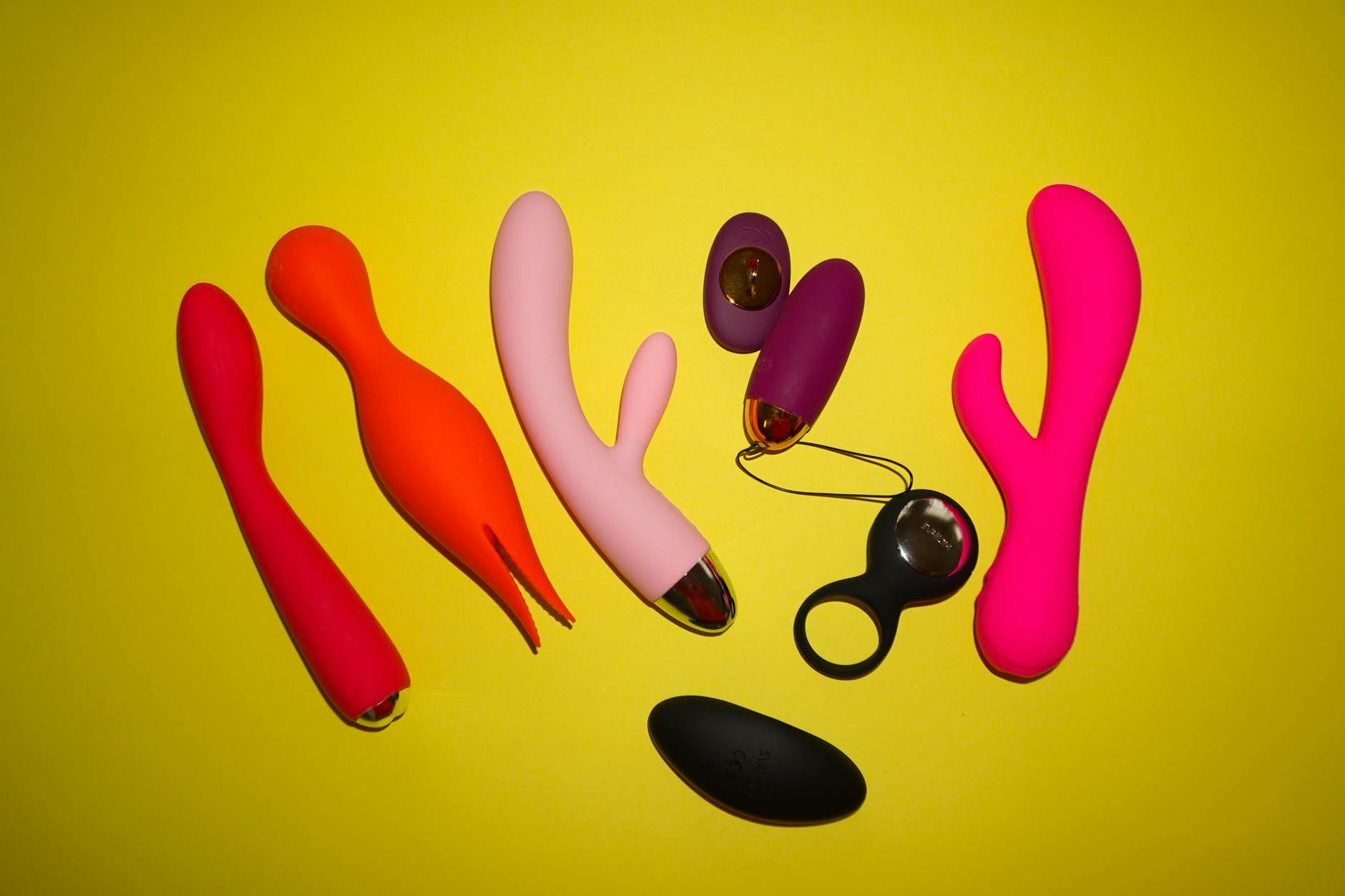
Photo by FounderTips on Pexels
The practical setup that actually works
If you're introducing a lemon vibrator into a mismatched relationship, timing and framing matter enormously.
Don't introduce it mid-conflict or mid-rejection. Introduce it in a calm moment when you're both regulated. Say something like: "I've been thinking about how to make sure I'm not putting pressure on you for sex. I want to get myself a vibrator to use sometimes solo. I'm telling you this because honesty matters to me, not because I'm unhappy with you." That's it. You don't need their permission. You do need their knowledge.
If you want to use it together, have that conversation separately. "Sometimes I'd love for us to try something where I use a vibrator while we're close. That way I can get what my body needs and we're still connected. Does that sound like something you'd want to try?" If they say no, don't push. If they say yes, start slow. Maybe they just hold you while you use it. Maybe you're intimate but not penetrating. Build from there.
The key is: never use a vibrator as a weapon or a criticism. Never use it to punish your partner for not wanting sex as often as you do. The moment it becomes about blame, it stops being a tool and starts being a problem.
When libido mismatch is actually about something else
Sometimes the real issue isn't desire frequency. It's safety, resentment, or a broken repair conversation.
If your partner used to want sex more and suddenly doesn't, that's often a signal that something in the relationship broke. A comment that felt small to you landed big. A time you didn't show up emotionally. A pattern of feeling unheard. Before a vibrator helps anything, that repair needs to happen. Bring in a couples therapist if you can't do it alone.
If the mismatch started when you had kids, when you got married, or when you moved in together, it might be about lost autonomy or changing expectations. That needs conversation too.
A lemon vibrator can't fix a broken relationship. It can only support a relationship that's already intact.
What to expect when things shift
Honestly? Sometimes everything shifts immediately. The high-desire partner feels less resentful. The low-desire partner feels less pressured. Sex becomes less fraught and more connected. That's the best-case scenario.
Other times, the low-desire partner's desire does actually increase once the pressure is gone. This is weirdly common. Desire often shows up when it doesn't feel obligatory.
And sometimes? Nothing changes in frequency, but the quality of the sex you do have improves dramatically. You're both more present. There's less resentment in the room. That's also a win.
The point is that using a clitoral vibrator in a mismatched relationship isn't about coaxing someone into wanting more sex. It's about separating your pleasure from your partner's obligation, and that changes everything.
FAQ
What if my partner feels threatened by a vibrator?
That reaction often comes from the belief that a vibrator means you'd prefer it to them, or that you're unhappy with the sex you have. Neither is true. It might help to name that directly: "I want this for me, not because of anything you're not doing. My pleasure and our connection are two separate things." If they can't move past the threat after that conversation, that's worth exploring with a therapist. It might signal deeper insecurity or control dynamics that deserve attention.
Can a vibrator actually help us want sex at the same frequency?
Not always, and that's okay. What it does is take the pressure off so you can relax into whatever frequency actually works for both of you. Sometimes that's three times a week. Sometimes that's twice a month and you've both made peace with it. The goal isn't matching frequency. The goal is connection without resentment.
What if using a vibrator solo makes my partner feel more rejected?
That's a sign the conversation needs to happen in a different way, or at a different time. Your partner might need reassurance that solo pleasure is about meeting your own needs, not about avoiding theirs. It might also mean they need professional support processing insecurity. Again, a therapist can help.
Should we always use a vibrator together if we're mismatched?
No. Some couples prefer to keep solo pleasure completely separate. Others love integrating toys into partnered sex. There's no right answer. The only rule is that both people have said yes and nobody is doing it to fix the other person.
How do I bring this up without sounding like I'm criticizing their sex?
Lead with your own needs, not their deficiency. "I've realized I orgasm more reliably and intensely with clitoral stimulation, and I want to explore that" is different from "You're not getting me there." One is about your body. The other is about blame.
What if my lower-desire partner wants to use a vibrator more than I do?
Then you've actually solved the mismatch in a different way. Support it. Watch how they light up when they're pursuing their own pleasure. That's usually when desire for connection (not obligation) starts to return.
The bigger picture
Libido mismatch is one of the hardest relationship problems because it touches everything: identity, attraction, feeling wanted, feeling like you want. It's not simple. But it is solvable, and usually not in the way couples expect.
A lemon vibrator isn't a Band-Aid. It's a conversation starter that separates "my pleasure" from "your obligation." Once you untangle those two things, you can actually build something sustainable. Real desire can't grow in a bed where one person is keeping score or the other is drowning in pressure.
If the mismatch is still creating distance after you've introduced a vibrator and had those three conversations, that's when you bring in a couples therapist. That's not failure. That's wisdom. Sometimes you need help learning how to want at the same pace, or making peace with not wanting at the same pace. Either way, you deserve someone who knows how to guide you through it.
Your pleasure matters. Your partner's boundaries matter. You can honor both.