
Here's the thing nobody tells you
Arousal isn't supposed to feel like a light switch. For a lot of people, especially as bodies change or as stress accumulates, the pathway to desire looks more like a slow dial than a on-off button. That's not dysfunction. That's just how pleasure works sometimes.
The problem is that we're culturally trained to expect arousal to feel fast and urgent. Movies compress it into 30 seconds. Partners get restless. You start second-guessing whether something's wrong. Then you reach for the lemon vibrator hoping it'll speed things up, which only adds pressure to an already-stalled experience.
Let me be direct: using a clitoral vibrator when your body isn't ready will frustrate you. But knowing how to use one intentionally, on your own timeline, changes everything.
Why arousal slows down (and why it's not personal)
There are about a dozen reasons arousal takes longer to build. Stress is the obvious one. Hormonal shifts (whether from birth control, age, or medication) absolutely slow the pathway. Low relationship novelty, depression, distraction, or just your natural wiring can do it too.
But here's what matters: none of these mean your capacity for pleasure has shrunk. It's just the ramp up that's longer.
Physiologically, what's happening is that your nervous system is taking longer to transition from the sympathetic state (alert, scanning for threat) to the parasympathetic state (calm, receptive, focused). The clitoris doesn't engorge as quickly. Blood flow takes a few extra beats to arrive. Your brain is still partially running other scripts instead of being fully present.
A lemon vibrator can absolutely help here. But only if you stop trying to rush the process.
Set the environment first, touch second
I know this sounds obvious, but most people skip it and jump straight to the vibrator. Don't.
If your arousal is slow, your environment matters more than it does for someone who gets turned on in 30 seconds. That includes physical space (temperature, lighting, privacy), mental space (phone off, work thoughts parked elsewhere), and relational space (if with a partner, are you actually present together, or are you performing).
Start with 10-15 minutes of doing nothing. Breathing. Light touch without the goal of pleasure. Notice your body. Let your nervous system downshift. This isn't foreplay yet. It's permission to slow down.
If you're with a partner, this might mean kissing, skin contact, or just being close while you both settle. If you're solo, it might mean a warm shower, soft music, or lying down and noticing what you feel.
Only after your body has actually begun to soften should you reach for the lemon vibrator.
The tempo pattern that works when arousal is sluggish
Most people use vibrators at full intensity from the start, expecting the stimulation itself to generate arousal. With slower-to-build pleasure, that backfires. The vibration feels flat. Your body doesn't respond. You get frustrated.
Instead, use this pattern:
Minutes 1-3: Pattern 1 or 2, external exploration only. Hold the lemon vibrator near (not directly on) your clitoris. Get a sense of how the vibration feels. Move it slowly around the vulva, the inner thighs, the perineum. Your job here is sensation mapping, not arousal chasing.
Minutes 4-7: Stay at pattern 2-3, direct contact, constant placement. Once you've warmed up to the vibration, rest the lemon vibrator on your clitoris without moving it. Let the vibration do the work. Many people expect to move the vibrator around, but constant gentle pressure builds arousal more reliably when your body is slow to respond.
Minutes 8+: Increase intensity gradually as your body responds. If arousal is building, you can move to pattern 3-4. If nothing's happening after 8 minutes, don't panic. Stop, breathe, reset. Arousal sometimes takes 15-20 minutes. That's normal.
The key is patience with the pattern. You're not trying to force a quick orgasm. You're letting vibration be part of a longer arc.
What to do if you're with a partner
If arousal is slow and you're using a lemon vibrator with someone else, the dynamic changes slightly. A lot of partners feel useless when a vibrator enters the room, which creates tension, which kills arousal even faster.
So be explicit about what you need. "I want you here while I use this, but I need quiet touch and no pressure about timing." Or "I want to do this solo first, then we come together." Or "Help me warm up without the vibrator, then I'll use this when I'm ready."
A partner's job during slower arousal is to stay present and patient, not to perform or prove anything. This is actually harder than you'd think. But it works.
The role of lubrication in slow-building pleasure
When arousal takes longer, natural lubrication also takes longer. This matters because dry tissue plus direct vibration can feel irritating instead of pleasurable, which stalls arousal further.
Use water-based lube from the beginning, even if you usually don't need it immediately. This isn't a sign of a problem. It's a tool for smooth sensation. Apply it to the outside of your vulva and to the lemon vibrator's contact point.
This simple step removes friction, which removes a small layer of friction-related discomfort, which lets your nervous system relax a bit more. It's not a big deal, but it compounds.
When distraction is the real blocker
Sometimes arousal takes longer because your mind is somewhere else entirely. The vibrator feels nice, but you're still half-running through your work email or the argument you had.
If this is you, the vibrator alone won't fix it. You need a different strategy first.
Try this: set a timer for 15 minutes. During those 15 minutes, your only job is to notice sensation. Not feel good, not build toward pleasure, not check in with whether you're aroused yet. Just notice. Cold spot in the room? Notice it. Tension in your chest? Notice it. Sensation where you're touching yourself? Notice it.
This is a meditation disguised as foreplay. It retrains your brain to actually be present instead of in autopilot mode. Then, when you use the lemon vibrator, your nervous system is actually ready to receive the signal.
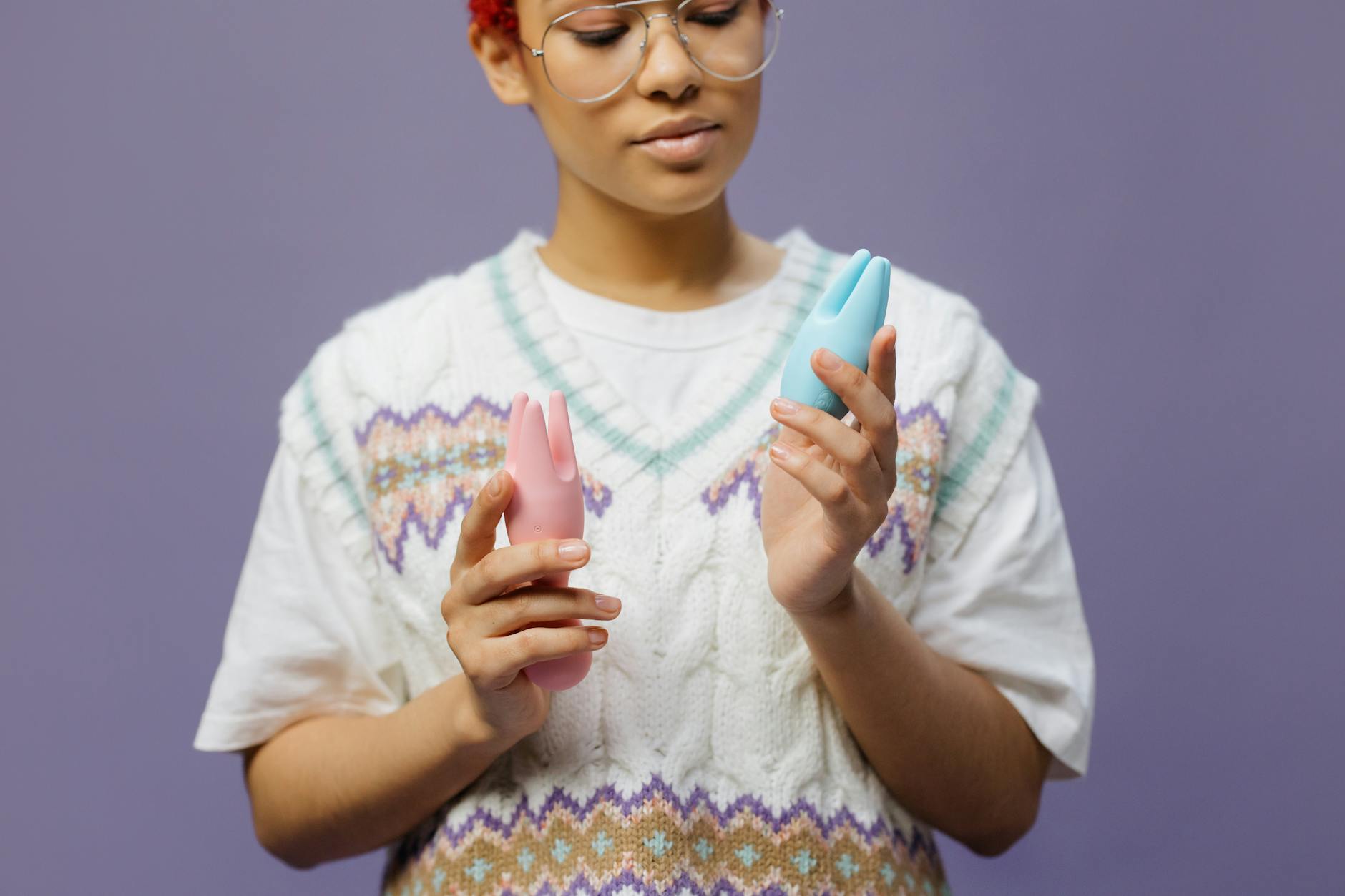
Photo by cottonbro studio on Pexels
Managing the mental game
Here's where most people lose it: once you realize arousal is slow, your brain immediately starts narrating a failure story. "This is broken." "I'm taking too long." "My partner is getting bored." "Why can't I just feel turned on like a normal person."
That narration is the actual blocker. The vibrator can't penetrate that noise.
You need a redirect. When you notice the failure story starting, name it. "There's the anxiety. That's interesting." Then return to sensation. You're not trying to defeat the anxiety or prove it wrong. You're just gently returning attention to your body instead of your thoughts.
This is hard. It takes practice. But the lemon clitoral vibrator becomes 10 times more effective once you've quieted some of that internal commentary.
See also: if anxiety is the core blocker, using a lemon vibrator when anxiety blocks arousal goes deeper into this.
When slow arousal is actually a relationship signal
I say this carefully: sometimes arousal takes longer because something in the relationship itself needs attention. Not always. But sometimes.
If you're solo, slow arousal is usually just neurobiology. But if you're with a partner and arousal has gradually gotten slower over months or years, it might be worth asking yourself some questions. Do you feel safe? Do you feel seen? Is there unresolved conflict? Do you actually want to be intimate right now, or are you performing it?
None of these get solved by a vibrator. They get solved by talking to your partner, and possibly by working with a therapist. A lemon vibrator is a tool for pleasure, not a fix for disconnection.
The patience payoff
I know this whole approach sounds slower and more deliberate than you probably want. Most people want the quick fix. But here's what I've seen: when people actually give themselves permission to have slow arousal and build pleasure on that real timeline, the sensation is deeper. The orgasm is more intense. The entire experience feels less like performance and more like actual pleasure.
The lemon vibrator isn't meant to compress your arousal into 2 minutes. It's meant to complement your body's real pace and help you get to satisfaction without fighting yourself.
That takes about 20-30 minutes sometimes. And that's not a bug. That's exactly how it's supposed to work.
People also ask
Is it normal for arousal to take 15-20 minutes to build?
Completely normal. Arousal timing varies wildly based on stress, hormones, relationship dynamics, and individual neurology. The idea that it should be instant is a myth. A lemon vibrator can help facilitate pleasure across that longer timeline, but the timeline itself is perfectly healthy.
Can a lemon vibrator work if I'm not aroused at all when I start?
Yes, but with a caveat. Vibration can sometimes jumpstart arousal. More often, it works best when there's at least a tiny bit of baseline interest. If you feel completely numb, the vibrator alone won't create desire. Start with the reset techniques first (warmth, safety, mental presence), then use the vibrator.
What if my partner gets frustrated waiting for me to build arousal?
This is a communication issue, not a vibrator issue. Your partner needs to understand that pressure and impatience kill arousal faster. If they can't slow down with you, or if they consistently make you feel rushed, that's a relationship dynamic worth examining. Some couples benefit from guidance on different arousal speeds.
Does lube help if you're not naturally lubricating?
Yes. Water-based lubricant removes friction and discomfort, which actually helps arousal build. It's not a sign something's wrong. It's a practical tool.
If arousal is slow solo, should I still try partnered sex?
Solo arousal and partnered arousal can feel completely different. Sometimes slower arousal solo is just your baseline, and partnered touch changes everything. Try both before you conclude anything about your capacity.
How long should I wait before I think something's actually wrong?
If arousal is consistently difficult, painful, or absent for months, talk to a doctor or therapist. There's a huge range of normal. But persistent difficulty that causes distress deserves professional attention.
The real timeline
Let's be honest: you probably want permission to take 30 minutes or more for pleasure and have that feel intentional, not like something's broken. You have it. Your nervous system is just wired to move slower right now, and that's valid. A lemon clitoral vibrator is a perfect match for that pace. Use it the way your body actually works, not the way you think it should work.
Your pleasure matters. And it doesn't have to be fast to count.