
Let's talk about tissue thickness and why it matters
Honestly, no one explains this part clearly. Your clitoral tissue is not all the same density, and that's not a bug in your body. It's just how tissue responds to hormones, age, genetics, and life. But if your tissue is naturally thicker, standard vibration patterns can feel muffled, ineffective, or downright frustrating. You might think you need a stronger vibrator when really you need a different approach.
Thick tissue is common. It's not rare. It's not a sign of anything wrong. It's also completely workable once you understand what actually reaches the nerve endings underneath.
Why thickness changes sensation
Your clitoris is not a small button sitting on the surface. It's a complex structure with external and internal branches, and the nerve density sits deeper than most people realize. When tissue is thicker, you have more cushioning between the vibration source and those nerves. A gentle, high-frequency buzz might never reach deep enough to register as pleasure. Instead it just vibrates the outer layer and goes nowhere.
Think of it like knocking on a door through a thick soundproofed wall. A quiet knock disappears. But a more forceful knock, or a deeper frequency, gets through.
The good news: you don't need to buy a jack-hammer vibrator. You need better technique, the right pressure, and often a clitoral device designed to create suction rather than pure buzz. The Lemon clitoral vibrator, for instance, works differently than a standard vibrator because it uses suction combined with vibration. That combination reaches deeper tissue more effectively than vibration alone.
How suction beats pure vibration for thick tissue
A suction vibrator like the Lemon works by creating gentle negative pressure around the clitoris. That pull draws tissue slightly upward, which actually compresses the tissue between the suction cup and the internal clitoral structure underneath. You get stimulation on multiple planes at once, plus the vibration hits tissue that's been brought closer to the surface. Thick tissue responds to this more reliably than it does to straight buzzing.
With pure vibration, all the energy is going into shaking tissue in place. With suction, you're moving tissue, changing the angles, and reaching deeper sensation with less pure vibration strength needed.
This is why people with thick tissue often describe suction devices as finally feeling like something. Not rough, not overwhelming, but actually there.
Starting position matters more than you think
Before you even turn on the device, positioning determines everything. Lie on your back with a pillow under your lower back, angling your pelvis slightly upward. This changes the angle of approach and flattens tissue slightly, making it easier for suction or vibration to make contact with the right nerves.
If you're sitting up or at a different angle, you're fighting gravity and tissue position. The vibrator might be pointing at you, but the clitoris itself might be positioned away from where you think it is. A few inches and a small angle shift changes the whole experience.
Once you find the right angle, remember it. Consistency matters more than you'd think.
The power and pattern progression that works
Start at the lowest setting. Yes, even if you think you need more. Thick tissue is dense, but nerve endings are still nerve endings. At the lowest setting with the right device, you're testing responsiveness. Wait 30 to 45 seconds. Let the vibration actually work instead of immediately turning it up.
Once you feel something, you can gradually increase. But here's the crucial part: move through patterns slowly. Many people jump from pattern 1 to pattern 5, expecting to feel more. Instead, try 1, then 2, then 3, spending a minute or two at each level. You're teaching your tissue and nerves to wake up to the sensation, not shocking them.
With thick tissue, that gradual progression often produces stronger, more complete orgasms than jumping straight to high. Your body catches up as you escalate.
Pressure and angle adjustment during use
Once the vibrator is on, don't just hold it still. Move slightly. An inch to the left, a quarter-inch up, a subtle rotation. Thick tissue responds better when you're exploring angles rather than trying to park on one perfect spot. The nerve pathways branch in different directions, and thicker tissue means some angles access sensation better than others.
Pressure also shifts the experience. Gentle contact lets vibration be primary. Firmer contact with the device engages more tissue surface at once. With thick tissue, you often benefit from gradually increasing pressure as arousal builds. Start light, let sensation accumulate, then press a bit more firmly. That progression mirrors your body's natural arousal curve rather than fighting it.
Duration and the arousal-orgasm arc
Thick tissue often needs longer to build to orgasm. That's not a flaw. Budget 12 to 20 minutes if you're starting from neutral. Some people need even longer, and that's completely normal. Your body is not broken if it takes time. That time is building sensation, deepening nerve response, and creating the physiological conditions for stronger release.
Many people stop too early because they're expecting the 5-minute orgasm they read about online. With thick tissue and the right approach, the orgasm you get at minute 15 is often more complete than the frustrated, half-achieved feeling at minute 5 would ever be.
If you're partnered, this is worth explaining to them plainly. "My body works better with more time" is not a negotiation. It's information about how your pleasure works.
Why lemon clitoral vibrators work particularly well
A device like the Lemon vibrator is engineered for clitoral pleasure specifically, not as a multipurpose tool. That matters. The suction mechanism, the pattern options, and the weight distribution are all designed around what actually reaches clitoral nerves effectively. With thick tissue, that specificity is helpful. You're not fighting a device meant for something else.
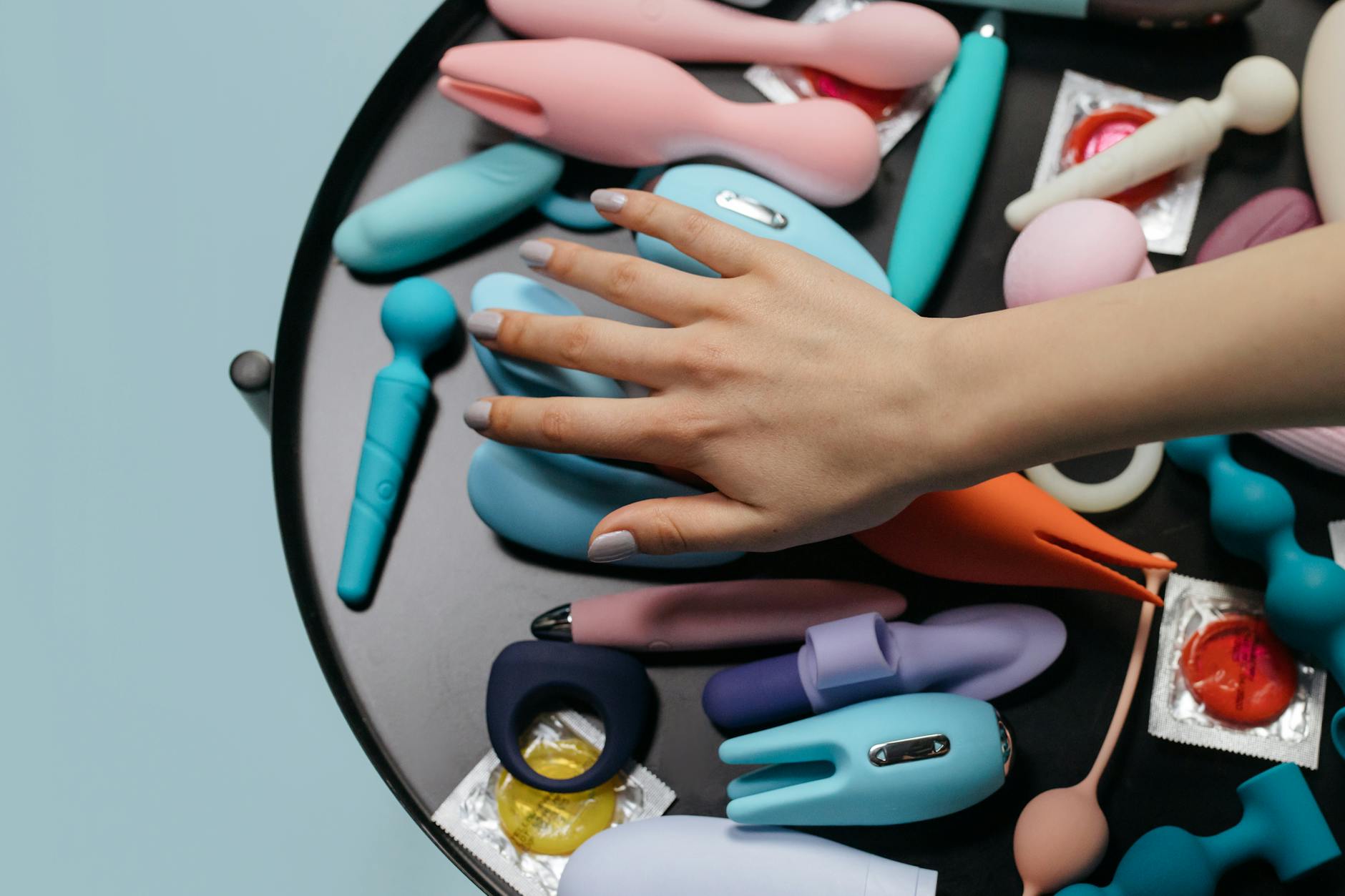
Photo by cottonbro studio on Pexels
The device also gives you a baseline. You know what pattern, pressure, and angle worked last time, so you're not reinventing your pleasure every session.
Frequency and building lasting changes
Here's something nobody talks about: regular use actually changes tissue responsiveness over time. Not the tissue itself, but the neural pathways that read sensation. Consistent use, even if it feels neutral the first few times, teaches your body to recognize and amplify those signals. After a week or two of regular sessions, thick tissue often becomes more responsive. Not because it changed, but because your nerve system got better at reading it.
This is why the first time often feels less dramatic than the tenth time with the same device. You're not broken. You're just warming up.
When to check in with a care provider
If you've tried this approach and there's actual pain, not just patience-requiring sensation, check with your gynecologist. Pain is information. It might be something simple like thrush or irritation, or it might be worth a conversation about your tissue health. But thick tissue itself is not painful. If you're experiencing that, it's worth getting checked.
FAQ: Common questions about thick tissue and vibrators
Can thick tissue make orgasm impossible?
No. Orgasm is possible with any tissue type. What changes is the route to get there. Thick tissue responds differently, not absent.
Is there a vibrator designed specifically for thick tissue?
Not marketed that way, but suction-based clitoral vibrators like Lemon work more effectively for thicker tissue than pure vibration devices do. The mechanism itself addresses the depth problem.
How long should I wait before trying a stronger vibrator?
Give the right technique and device at least four weeks of consistent use before assuming you need more power. Most people find thick tissue responds better to angle and pressure changes than to raw strength.
Does thick tissue change with hormones?
Yes, slightly. Estrogen levels affect tissue density and hydration. But the baseline thickness is relatively stable. Seasonal or cycle-related changes are usually minor unless you're approaching menopause.
Can I use the same lemon vibrator every time, or do I need to vary devices?
Consistency actually helps. The more familiar your body becomes with one device, the faster you tend to respond. Switching devices constantly resets that learning. Stick with one for at least a month before experimenting.
What if lubrication feels more important with thick tissue?
It often is. Thicker tissue can feel drier because it's less porous. Water-based lubricant is your friend. It makes contact easier and sensations clearer.
The wider picture
Thick tissue is not something to work around. It's something to work with. Once you stop thinking of it as an obstacle and start treating it as information about how your body is wired, pleasure becomes more consistent. The right device, the right angles, the right patience, and regular practice create results that actually improve over time.
Your body is not difficult. You just needed the right instruction manual. If you want to talk through what's working or what isn't, reach out. I'm here to help you build a pleasure practice that actually fits your body, not some generic version that never quite lands.