Here's what nobody warns you about with long-term relationships
After 5, 10, 15 years with someone, your sexuality doesn't just evolve. It gets entangled. You've shaped your desire around their rhythm, their preferences, what turns them on, what keeps them interested. You've learned to read them instead of yourself. And somewhere in that process, you stopped knowing what you actually want.
Then something shifts. A health issue. A conversation that doesn't land right. A slow drift that feels irreversible. Suddenly the intimacy that was once automatic feels like it requires negotiation. And here's the part that catches people off guard: you realize you don't trust your own body anymore.
You've spent so long performing pleasure that you're not sure what genuine pleasure feels like. That's not a relationship failure. That's actually a really common inflection point. And it's fixable.
What happens to desire in long-term relationships
I've worked with thousands of couples in this exact space, and the pattern is consistent. In the early years, desire is largely novelty-driven. Your nervous system is activated. Everything feels new. Then, as relationships mature, that shifts. Desire becomes either attached to the relationship itself (deepening intimacy, safety, familiarity) or it disconnects entirely.
But here's what gets missed: many people confuse "disconnected from my partner" with "disconnected from pleasure itself." They're not the same thing at all.

Photo by cottonbro studio on Pexels
When you've spent years with one partner, your body learns patterns. It knows what to expect. There's safety in that, absolutely. But there's also a kind of autopilot that can feel flat. Your nervous system isn't actually engaged. You're going through motions. And over time, you start to believe that's all you're capable of anymore.
The truth is simpler and stranger: your capacity for pleasure didn't shrink. You just stopped exploring it independently. You forgot that your own touch, your own timing, your own rhythm is information.
Why solo exploration matters more than your partner might realize
Let's be direct about this. If you can't feel pleasure on your own, you can't authentically feel it with a partner either. That's not a failure of the relationship. It's a sign that reconnecting with your own body needs to come first.
Solo time with yourself is not a workaround for relationship problems. It's the foundation. When you know exactly what feels good, what rhythm works, how your body responds when there's zero performance pressure, you get three things. One: actual confidence. Not performative confidence. Real knowledge of what you're capable of. Two: you become less dependent on your partner to generate your pleasure. That paradoxically makes partnered sex better because you're meeting them from a place of fullness instead of scarcity. Three: you remember that your body is trustworthy.
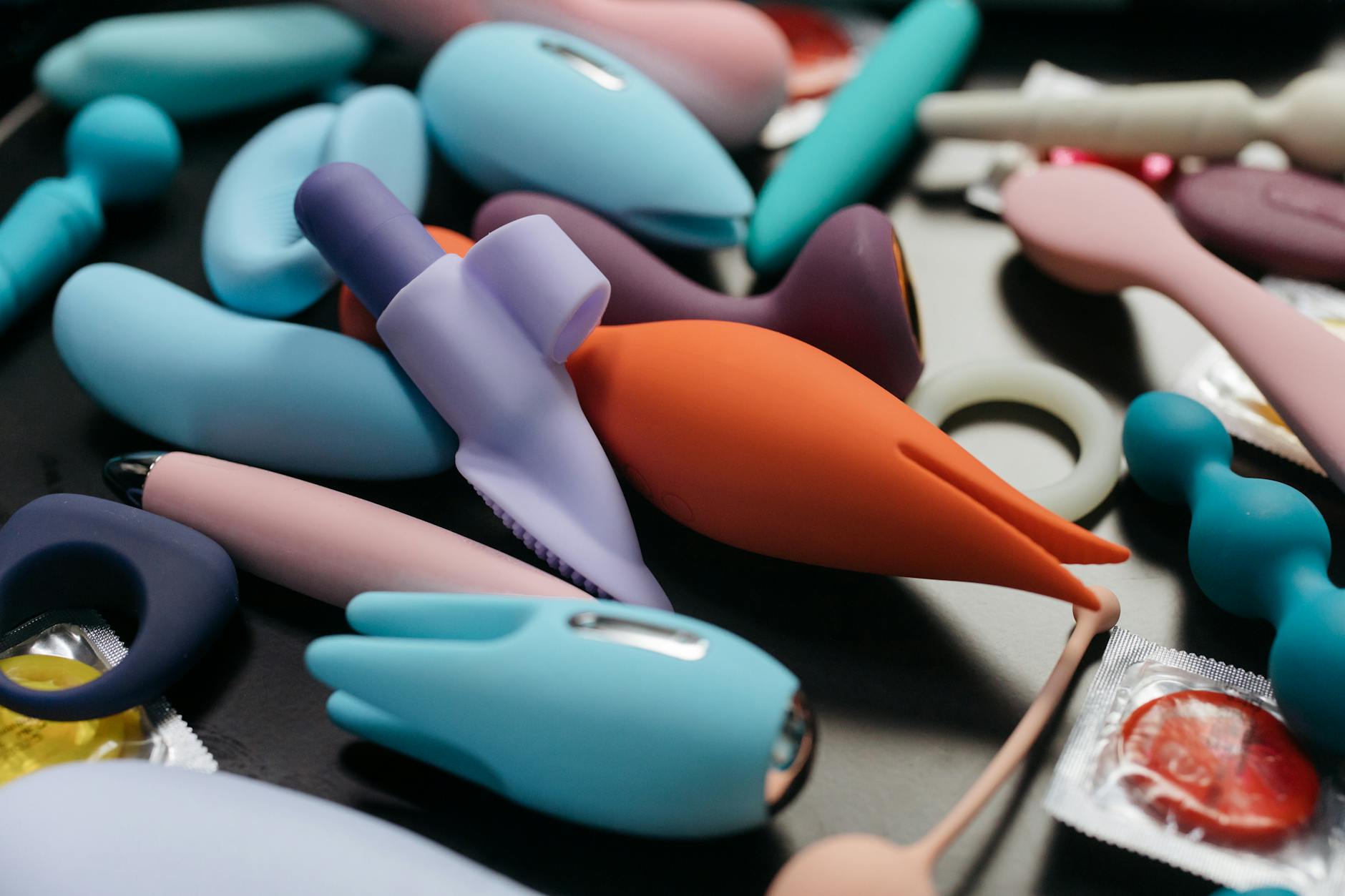
Lemon vibrators, especially the clitoral kind, are uniquely good for this work because they're forgiving. They require no setup. No negotiation. No performance. Just you and direct, consistent stimulation. No guessing. No waiting. No checking if you're taking too long. You can restart a hundred times and it doesn't matter.
The specific barriers women face rebuilding this confidence
Honestly though, the transition from "partnered for years" back to solo pleasure comes with some genuine friction. First, there's often shame. You feel like you should want your partner. You should be able to just... relax. You're not broken for needing a vibrator. You're using information. A lemon clitoral vibrator is a tool that lets you bypass the noise and access what's actually there.
Second, there's the attention problem. After years of being half-present during sex, your brain has learned to dissociate. It wanders. It thinks about the shopping list. It second-guesses whether you're taking too long or making weird faces. Solo time with a toy is the easiest way to teach your nervous system to come back. Air-suction toys like the ones Lemon Suckers makes are particularly effective because they demand a different kind of attention than partnered sex. The sensation is so specific and present that your mind has to track it.
Third, there's the logistics of actually doing it. After years of sex that revolves around your partner's availability and timeline, you might feel like you need permission or a perfect moment. You don't. Set a timer. 20 minutes. No phone. No planning beyond "okay, tonight." That's it.
How to actually start, without overthinking it
If you're rebuilding this alone, here's what works. First, give yourself a week of just exploration with no goal. No pressure for an orgasm. This sounds simple but it's genuinely hard if you've been in performance mode for years. Your job is just to notice. What speed feels good? What pattern? Does pressure feel better if you start light or go straight in? Does rhythm matter or would you rather random? Does the vibration pattern change how you feel minute to minute?
Don't try to organize this into something useful yet. Just data collection.
Second, once you know what feels good, add one constraint at a time. Maybe it's "I want to come in under five minutes" or "I want to use a specific pattern." Maybe it's "I want to orgasm and then keep going." Each constraint is a conversation with your own body. You're asking questions. Your body answers.
Third, and this is the part people skip: notice how you feel after. Not just physically. Emotionally. Do you feel energized or depleted? Proud or ashamed? Curious or done? Your feelings are data too. If something leaves you feeling worse, that's information. Adjust.

Photo by cottonbro studio on Pexels
When you're ready to bring that back into partnered sex, the shift is usually subtle but powerful. You're not asking your partner to fix you. You're inviting them into something you already know how to access. That's an entirely different energy.
What to do if your partner feels threatened by this
Some people do. And there are usually three different things happening underneath that reaction. The first is insecurity ("If you need a toy, I'm not enough"). The second is loss of control ("I can't give you an orgasm now"). The third is just unfamiliarity ("I don't know what this means for us").
None of those are actually true. But they feel true if nobody names them. A conversation that helps: "I'm not doing this instead of you. I'm doing this to know myself better so that when we're together, I'm more present and more confident." That's true. Say it.
If your partner continues to see your solo pleasure as a threat rather than a resource, that's a different conversation. And it might be worth having with someone trained in couples counseling who can help you both understand what that resistance is really about.
The confidence piece nobody talks about
Here's what actually shifts when you do this work. You stop being afraid of your own desire. You stop wondering if you're normal or broken or too much. You start understanding that your pleasure is information, not a character flaw. And that changes everything.
Within relationships, that shows up as clarity. You know what you need instead of hoping your partner figures it out. You can ask for it without apology. You can receive pleasure without guilt. You can initiate instead of waiting. These sound like small things. They're not. They're the difference between a dynamic that feels stalled and one that feels alive.
When you know your own body, you're not vulnerable to someone else's narrative about it. That's the real confidence. Not arrogance. Not performance. Just knowledge.
FAQ
What's the difference between using a lemon vibrator solo versus with a partner?
Solo, you're learning. With a partner, you're communicating. A lemon vibrator becomes a tool for pleasure when you're alone and a tool for connection when they're involved. The vibration pattern itself doesn't change, but the context does. Solo, you're asking "What do I like?" With a partner, you're showing them "Here's what I like, and I'm inviting you into it."
How long does it actually take to rebuild sexual confidence after years in a long-term relationship?
That depends entirely on your starting point and consistency. Some people notice a difference in two weeks of regular solo time. Others need two months to feel genuinely reconnected. The key is regularity, not intensity. Twice a week beats once every three weeks. And be patient with yourself. You've spent years learning a particular pattern. Your nervous system needs time to learn a new one.
Is it normal to feel guilty using a clitoral vibrator when you have a partner?
Completely normal and also worth interrogating. Guilt often comes from the belief that your pleasure is somehow your partner's responsibility. It's not. Your pleasure is yours. Your partner can be involved in it, but they can't generate it for you. Once you separate those two ideas, guilt usually loosens.
What if I can't orgasm solo with a vibrator but I could before the relationship?
That often means your body is still in "performance mode." You're subconsciously waiting for permission or expecting it to work a certain way. Try removing the goal entirely. Use it for sensation. For presence. For curiosity. The orgasm will often follow once you stop demanding it. And if it doesn't, that's fine too. Solo pleasure isn't only about orgasms.
Can I use lemon vibrators with my partner if they've never wanted toys before?
Yes, but the approach matters. Instead of introducing it as "I need this," try "I've been exploring this on my own and I really enjoy it. I'd like to share that with you." Show them what you've learned. Let them watch. Let them ask questions. Most people who seem resistant to toys are actually just nervous because it's unfamiliar. Familiarity changes that.
How do I know if I'm using a vibrator as avoidance instead of exploration?
Good question. Avoidance usually feels numb or mechanical. Exploration feels curious or energized. Pay attention to what happens after. If you feel more disconnected from your relationship or increasingly resentful of partnered sex, that's a sign something needs shifting. If you feel more confident and more able to be present, you're on the right track.
The actual work is in staying present
Rebuilding sexual confidence after years in a long-term relationship isn't about finding the right toy. It's about remembering that your own pleasure matters. That your body's responses are valid. That you're allowed to want things independent of what your partner wants.
A lemon vibrator is just permission in object form. The real work is using it to tell yourself the truth about what you need. And then trusting that enough to ask for it.
Want to explore this more? Reach out to us to talk through what rebuilding looks like for your specific situation.